The U.S.'s recycling efforts have come a long way in the past few decades, with many of us adopting planet-friendly disposal methods at home and work. According to the EPA, Americans recycled 69 million tons of waste in 2018 and composted another 25 million tons.
However, there’s still room for improvement. Of the roughly 300 million tons of municipal solid waste (MSW) created in 2018, more than 50% percent ended up in landfills. When Americans know which materials they can compost and reuse, they can divert more waste from landfills and create a healthier world.
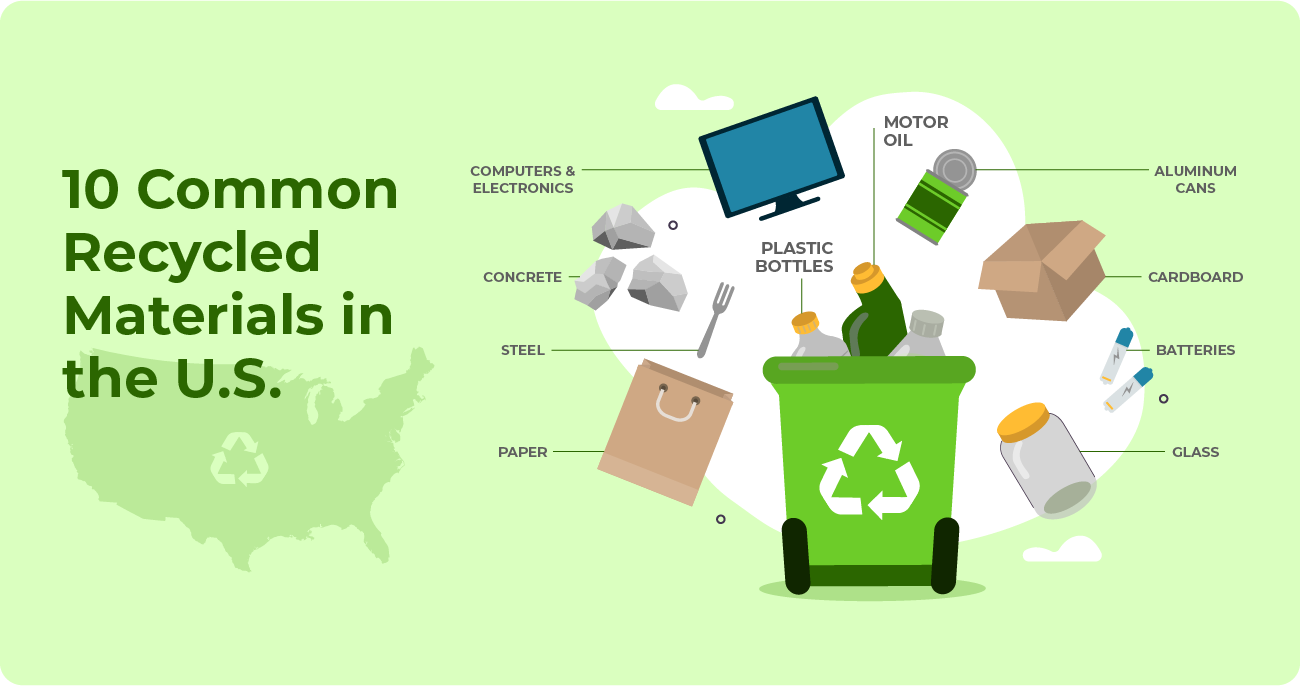
The Most Recycled Materials in the United States
Paper
The EPA’s report on recycling and waste materials in 2018 found that paper is the most significant waste category, with paper products accounting for nearly a quarter of all MSW.
Although mixed paper will decompose in landfills, the vast majority is recyclable. There are far more ecological benefits to recycling paper than burning it or throwing it in the garbage, including:
- Cleaner air - Recycling paper reduces CO2 emissions from greenhouse gasses, conserves fossil fuels, and lowers the paper industry’s energy footprint.
- Reforestation - A ton of recycled paper generates enough new products to save 17 trees.
- Saving water - Recycling paper reduces the amount of water needed to plant more trees.
- Biodiversity - Pine forests planted chiefly for paper create a monoculture that disrupts the ecosystem.
How Can We Reduce Paper Use?
More and more kinds of paper products are accepted by recycling companies each year, and consumers are driving the market for increased use of recycled paper products. In addition to recycling paper whenever possible, you can:
- Go paperless: You can save time (and money) by having monthly bills and statements delivered by email or through secure online portals. Go further and only print electronic reports and documents when necessary.
- Read online: Many newspapers have switched to online publishing, while magazines may only publish paper copies every other month. A digital subscription to your favorite publication doesn’t just save paper—it can be delivered instantly (with no shipping fuel costs)!
- Shop smart: Companies are moving away from planet-unfriendly packaging, opting for recycled paperboard or shredded paper as padding. Consider this in your next purchase if you receive a package containing packing peanuts or styrofoam molds.
Aluminum Cans
In a world moving away from plastic, aluminum cans are a leader in single-use beverage containers. They offer manufacturers a flexible and durable product without the added shipping weight and fragility of glass. They’re also one of the most easy to recycle materials, easily crushed, shredded, and melted down into ingots.
Can deposits (an incentive to consumers) contribute to the high recycling rate of aluminum cans. Over 75% of the aluminum ever manufactured in North America is still being used in some form today. Five million tons of aluminum is recycled annually, saving significant energy compared to manufacturing cans from virgin materials.
How Can We Improve Aluminum Recycling?
- Use Recycling Bins: Place aluminum items in designated recycling bins or containers. If your area doesn't have recycling bins, encourage local authorities to provide them.
- Dispose of Electronics Responsibly: Many electronic devices contain aluminum components. When disposing of old electronics, take them to electronic recycling centers to ensure the aluminum is properly recovered.
Plastic Bottles
From water bottles to children’s toys, plastics are a daily reality for all Americans. While many plastic products and containers are recycled, more are created daily to take their place. Our continued use of high-density polyethylene (HDPE) wastes energy, poisons landfills, and endangered animals and water systems.
How Can We Reduce Plastic Use?
- Bring your bags. Billions of plastic grocery bags are produced yearly, each taking years to degrade naturally. Always take your own cloth bags and reusable produce bags when you go grocery shopping.
- No extras, please. It’s okay to request no silverware with your take-out order or a daily coffee without the straw. You’re saving the company money (and keeping the utensils for those who need them most).
- Consider going dry. Some products packaged in plastic can be made more sustainable by removing the water. Try using shampoo bars, powdered laundry detergent, or toothpaste tablets that use paper or glass packaging.
Cardboard
The EPA stated that corrugated boxes accounted for 32.1 million tons of recycled products in 2018, a fraction of the total amount used for shipping and packing. Although it takes roughly three tons of trees to make one ton of new cardboard, all corrugated cardboard can be recycled and reused an average of five times—giving businesses a financial and environmental motivation to recycle it.
How Can We Improve Cardboard Recycling?
- Break it down. Whether at home or work, always break down cardboard boxes before recycling.
- Keep it clean. Cardboard packaging is fully recyclable unless it contains a wax coating (like beverage cups) or is contaminated (such as a greasy pizza box).
- Read the label. Companies are increasingly creating sophisticated recyclable packaging. If you’re unsure how to dispose of it, check the packaging for instructions.
Glass
Glass is a contradiction in the recycling world. While it can be recycled endlessly without any loss of quality, the bulk recycling process is less profitable than other materials. Some companies prefer to reuse clear glass only, which must be sorted and filtered from bulk glass collection. Others have strict requirements on the exact amount of recycled green or brown glass they will accept to use in new materials.
How Can We Improve Glass Recycling?
- Streamline Separation. Implementing separate collection systems for different colors of glass (clear, green, and brown) maintains higher purity and reduces the burden on recycling companies.
- Clean containers. Stress the importance of cleaning glass containers with hot water and dishsoap before recycling. Any containers with food or chemical residue will likely be discarded instead of recycled.
- Glass-to-Glass Systems. Promote closed-loop recycling systems where glass is recycled back into glass containers rather than being downcycled into other products.
The Most Common Recycled Materials in Commercial and Industrial Businesses
Recycling benefits people on a personal and family level, but sustainability models have to go beyond our front doors to make a significant impact on the planet. Our workplaces, commercial enterprises, industrial manufacturers, and other businesses have a social duty to recycle and reuse their waste products.
While consumer recycling has strength in numbers, industrial recycling has the power of scale. Companies can go far beyond traditional household recycling efforts due to their wide use of industrial materials. For example, recyclable items commonly used by manufacturing and industrial businesses include:
Steel
Steel is also the most recycled material in the world, with roughly 70 million tons of domestic scrap used to produce new steel every year. It’s much more energy-efficient to recycle steel than to make virgin steel. As a result, nearly two out of every three tons of steel used in new products is recycled material. In addition, 90 percent of steelmaking by-products can be reused or recycled.
Concrete
Concrete and asphalt are the unsung heroes of industrial recycling. Often a by-product of construction and demolition waste, roughly 25% of the total concrete produced in the U.S. is recycled.
Recycled concrete has many applications, from road construction and flood mitigation to soil stabilization and landscaping. Recycled asphalt can prevent soil erosion, patch existing pavements, and replace gravel in various construction projects.
Computers and Electronics
Cellphones, hearing aids, and many other smart devices can be repurposed to create new electronics. Data on these devices is destroyed to protect privacy. Then, the electronics can be disassembled, and their processors, memory modules, and hard drives can be removed for potential refurbishment. Components that cannot be refurbished can be collected and melted down to manufacture new products.
Motor Oil
Any business that uses industrial oils or lubricants should have a used oil collection and recycling program. Used power steering fluid, refrigerant, lubricating oil, transmission fluid, gear oil, and brake fluid are all recyclable. If not disposed of properly, they can seriously disrupt the environment.
It takes 42 gallons of crude to create 2.5 quarts of new motor oil, whereas it only takes one gallon of used oil. Recycling industrial oil can reduce dependence on global supply chains. For example, if we recycled all of one year’s worth of U.S. waste oil, we would use half as much from the Alaskan pipeline the following year.
Batteries
Computers, mobile phones, vehicles, and even the remote control you use to turn on your electronics run on recyclable batteries. While it may take a specialized handler, the recycling rate of batteries is significantly high. In fact, 99% of all lead-acid batteries are recycled!
Take Your Company's Recycling Efforts to the Next Level
With companies increasingly adopting eco-friendly waste management strategies, your business can’t afford to ignore ESG ratings. The truth is that few products cannot be recycled, and maximizing these efforts can lead to significant improvements in customer loyalty and investor capital.
Of course, building an effective and sustainable waste-management and recycling program isn’t just a one-and-done task. There are many phases to crafting and refining your ecological waste program. Fortunately, we will stay with you every step of the way.
Contact us to learn how Waste Harmonics Keter can implement a turnkey sustainability program to keep track of your company’s environmental footprint.