Grease trap service, managed across every location
From under-sink traps to in-ground interceptors, Waste Harmonics Keter manages your grease trap pumping as a single managed partner, not a broker. One point of contact, one invoice, manifests you can defend at inspection.
A neglected trap can close a kitchen
Grease trap waste is regulated at the local level, with a different FOG rule in nearly every jurisdiction. Multi-site operators typically manage it site by site, with a different pumper in every market, missed service dates, and no manifests when the health inspector or municipality asks. The result is backups, odors, fines, and closed kitchens.
We make grease trap service scheduled, documented, and consistent everywhere you operate.
What counts as grease trap service we manage
Grease trap waste is the fats, oils, grease, and solids captured by traps and interceptors before they reach the sewer. We manage the pumping, cleaning, and documentation through one consistent program across every location.
Grease trap pumping & cleaning
Grease interceptor service (indoor & outdoor)
Scheduled service built around local FOG rules
Line jetting & preventive maintenance*
Emergency pump-outs & overflow response*
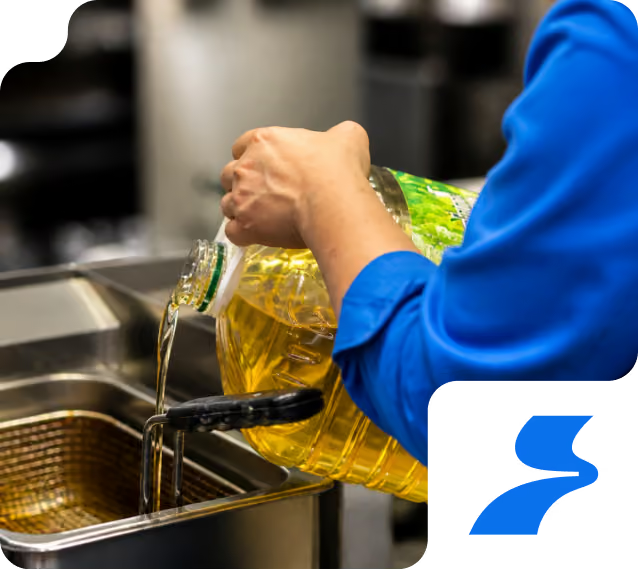
How WHK manages your grease trap program
We start by mapping what you generate across every location, then standardize your program with one cadence and vetted recyclers everywhere. Scheduled pickups come with chain-of-custody records, and your materials are processed responsibly with diversion and activity rolled into one report.
Assess
We map your trap and interceptor inventory, local FOG requirements, current pumpers, and where documentation is missing.
Standardize
One program: pumping schedules matched to trap size, kitchen volume, and local rules, with vetted providers in every market.
Collect & document
Scheduled pump-outs with manifests and chain-of-custody records you can defend at inspection.
Recycle & report
Trap waste routed to permitted processing facilities; service and compliance rolled into one report.
Simplify, save, and optimize

Simplify
One managed partner across every location; we wrangle the haulers, recyclers, and paperwork.
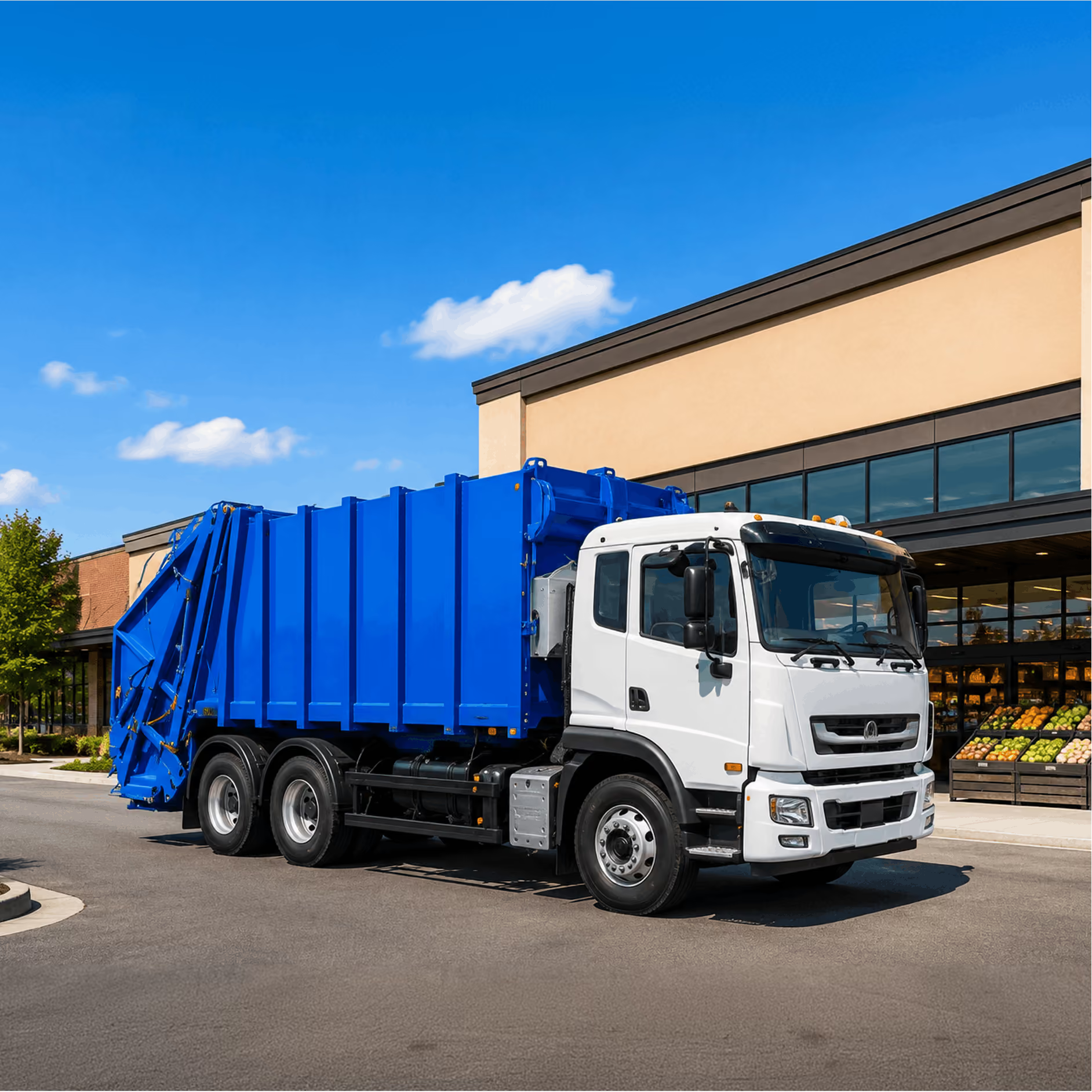
Save
Right-sized pickups and consolidated, transparent billing replace one-off disposal fees and untracked spend.

Optimize
Documentation, diversion tracking, and reporting that stand up to audit and feed ESG goals.
A broker hands your assets to whoever's cheapest and disappears. We own
the outcome. Vetted recyclers, real people, full accountability
Where your trap waste actually goes
Pumped grease trap waste is hauled to permitted processing facilities for treatment and responsible disposal, with manifests and chain-of-custody documentation at every step. Your compliance record is complete, current, and in one place, across every site.
Responsible routing
Trap waste hauled to permitted processing facilities by vetted providers.
Auditable recovery
Manifests and chain-of-custody records ready for health inspection and municipal compliance review.
Nationwide coverage,
local presence
Across a 3,500+ hauler network and 29,000+ locations, WHK delivers consistent grease trap service and reporting wherever your sites are. National footprint, local execution. That local reach is what lets us navigate jurisdiction-by-jurisdiction FOG rules under one program.
Hauler network
Locations serviced
Invoice, one standard
Built for multi-site food generators
Restaurants & QSR, grocery & supermarkets, hospitality, corporate dining & cafeterias, healthcare & senior living, and education, anywhere kitchens and grease traps operate across many locations and need one documented program.
Why multi-site food generators trust WHK
We don't broker your program. We own the relationship at every location you operate, which means we're answerable for what happens from pickup to final processing.
Every facility in our network is vetted and documented. Chain of custody records follow your materials through every step, giving you the evidence you need for compliance and ESG reporting.
Consolidated data across all locations rolls into one report. No piecing together invoices from five different vendors or explaining gaps in your diversion numbers to auditors.
We own your program end to end, not as a broker passing you between vendors.
FAQ
Common questions about our program and services.
It depends on trap size, kitchen volume, and local requirements. Many jurisdictions enforce the 25% rule, pumping once grease and solids reach a quarter of the trap's capacity. We build each site's schedule around its volume and local rules.
Both capture fats, oils, and grease before they reach the sewer. Traps are smaller units installed under or near sinks; interceptors are larger in-ground tanks serving the whole facility. Both require scheduled pumping and documentation under local FOG rules.
Yes. Every pump-out generates manifests and chain-of-custody records, kept current and accessible across your sites.
Yes, used cooking oil collection is a separate recyclable stream with its own service and value. See our Used Cooking Oil page or ask us about combining both in one program.
Yes, one managed program, consistent schedules, and one invoice across every site nationwide.
Still have questions?
Reach out to our team for specifics about your situation.
One stream. One managed program.
One accountable program for every location, hauler, and invoice.
Practical recovery programs with measurable, reportable diversion.
Right-size containers, schedules, and costs with monitoring and ongoing review.
Portfolio-level visibility into spend, service, and diversion.
See how programs come together in your industry.
Get out of the grease trap business.
One partner. Every location. Fully documented.