Managing waste is a critical concern for any business, but finding an efficient, cost-effective, and environmentally friendly disposal solution can be challenging. A business' waste stream composition, disposal regulations, sustainability goals, and budget constraints all play a role in determining its ideal disposal strategy.
Whether you are just starting your waste management journey or looking to improve an existing program, this article will help identify ways to manage your business' waste responsibly. Here, we explore some popular disposal methods, the pros and cons of each, and how companies can implement the most sustainable waste management initiatives.
Common Commercial Waste Disposal Methods
Rising environmental awareness is pushing more companies to incorporate recycling and renewable processes into their waste management plans. Businesses can develop an integrated waste management system using four or more of the methods listed below. This system not only reduces their environmental footprint but also maximizes operational efficiency.
Landfills
Believe it or not, landfills are still the most common way to dispose of municipal solid waste in the United States. At a landfill, waste is placed on a liner that acts as a barrier, preventing contaminants from entering groundwater. As trash gets packed down, it's covered with a layer of soil or clay to help prevent potentially hazardous wastes or chemicals from accidentally leaking out.
Operating a landfill requires a lot of work. Landfills regulated by state and local governments must meet strict requirements for their design, day-to-day operations, and eventual closure. In addition, sites must be closely monitored to ensure the waste isn't endangering wildlife or public health, which means higher disposal costs for businesses.
Incineration
Incineration uses high heat to reduce waste volume and destroy potential contaminants. As waste burns, it breaks down into basic components like gasses and ash. Commonly, incinerators are used to safely dispose of hazardous waste, pesticides, medical refuse, and other toxic waste materials unsuitable for landfills.
Burning waste is generally more affordable than other disposal methods. It produces nutrient-rich ash that can be reused to fertilize plants. However, unmonitored or improper combustion can generate air pollution.
Waste-to-Energy
Waste-to-energy (WtE) is a renewable energy source that helps divert waste from landfills. These systems incinerate municipal solid waste to generate heat or steam that ultimately produces electricity—turning non-recyclable waste into usable energy.
Capital costs and air emissions concerns still stymie the worldwide gain in popularity of WtE (Waste-to-Energy) technology. When equipped with proper pollution control systems, WtE can offer a sustainable waste disposal solution that generates clean energy.
Recycling
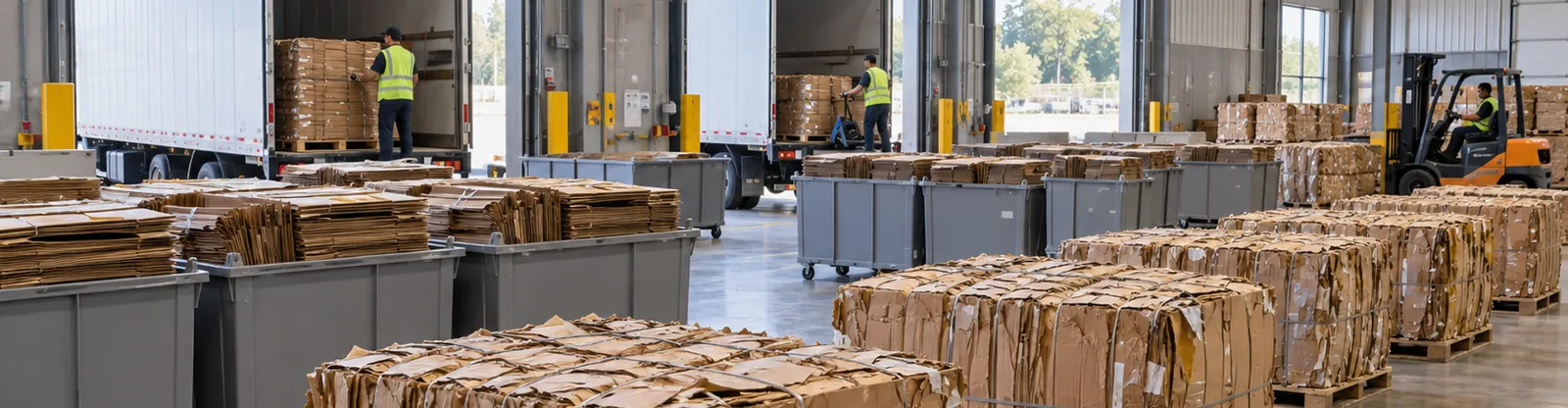
Recycling remains a pillar of integrated waste management strategies aimed at sustainability. Paper, plastic, wood, glass, metals, and other used materials are collected and reprocessed into new products.
Recycling reduces waste volume, conserves natural resources, lowers greenhouse gas emissions, and saves energy compared to making products from scratch. Despite these benefits, some materials have higher recycling rates than others. The practice also faces certain challenges, like low commodity prices and contamination.
Composting
Composting harnesses natural decomposition to turn food scraps, yard trimmings, and other organic waste into nutrient-rich soil amendments. Composting can be done on-site or off-site through pickup services.
Aerobic decomposition generates little to no methane emissions, and businesses can use the finished compost for landscaping or agriculture, or they can sell it. The only downside of natural decomposition is that it takes a lot of time (and potentially a lot of land).
Anaerobic Digestion
Anaerobic digestion offers an oxygen-free alternative to composting for managing organic business waste. Microorganisms break down biodegradables like food waste, fats, oils, and grease and produce biogas. Methane is captured and used for energy generation, while the leftover nutrient-rich residue can be used as fertilizer.
Anaerobic digestion facilities require substantial initial investment and are slower than traditional composting. However, new technologies have built a renewed interest in the process.
Reuse
Reuse offers businesses a way to reduce both waste and cost. It involves finding new applications for materials or products after their original use instead of disposing of them. Examples include reusing packaging for shipping, donating excess inventory or surplus equipment, refurbishing old furniture, and more. Some materials can be reused multiple times or indefinitely without losing performance or quality.
Extending the life of usable products conserves significant raw materials and natural resources. When products are no longer viable, they can then be sent for recycling, reducing per-item processing costs. That said, redirecting discarded materials back into use requires creativity and partnerships.
Waste Mitigation Strategies: Stopping the Problem Before it Starts
The best waste management approach will ultimately depend on your business' size, waste stream, and goals. However, your first step should be finding ways to stop waste materials from coming in, avoiding the need to plan how they go out.
Prevention
The amount of waste a business generates directly affects its profitability. Once you identify the biggest barriers to sustainability, you can begin a plan to phase them out or eliminate them from your operations entirely.
Common ways to prevent waste generation include:
- Source segregation. Encourage employees to separate recyclables from general waste into designated categories. Separation of waste at the initial point of generation improves recycling and landfill diversion rates.
- Paperless offices. Prioritize electronic documents and digital communication for a more efficient, print-free zone.
- Stop single-use. Opt for reusables instead of disposables wherever you can, especially plastics such as water bottles, utensils, and food containers.
Reduction
Waste reduction is the most preferred waste management strategy. It relies on circular economy principles like repair and refurbishment to minimize waste at the source before recycling, treatment, or disposal is required. Businesses can reduce waste through improved manufacturing processes, material substitutions, efficient inventory management, digital operations, and changing procurement practices.
Preventing waste cuts disposal costs, raw material consumption, logistics needs, and environmental impact. It requires upfront investment and engagement across the organization to identify reduction opportunities. Still, it saves money in the long term through new revenue streams and compounded savings.
Strategy
Every business has countless ways to go lean and green. Use your waste management statistics to pinpoint the most effective waste minimization strategies. Would simple changes help you save water? Could donating useful items turn trash fees into tax savings?
Go further by examining your vendors and suppliers and spreading waste reduction initiatives throughout your supply chain. Make a goal to purchase products with minimal plastic. Consider redesigning your product packaging to minimize waste.
Talk to WHK for Customized Waste Strategies
At WHK, we can help implement waste initiatives, track diversion rates, optimize material recovery, lower disposal costs, and shrink your carbon footprint. We rely on technology like sensors and analytics, providing actionable insights to enhance efficiency and results.
Need help managing your waste streams? Contact us for a demonstration of our turnkey solutions that can put your company on the fast track to sustainability.