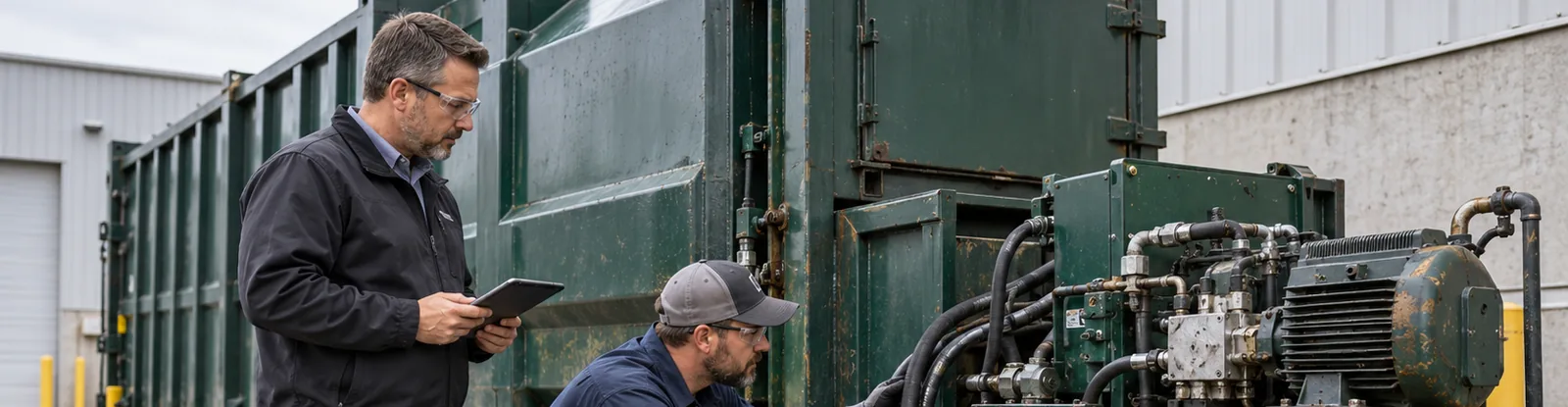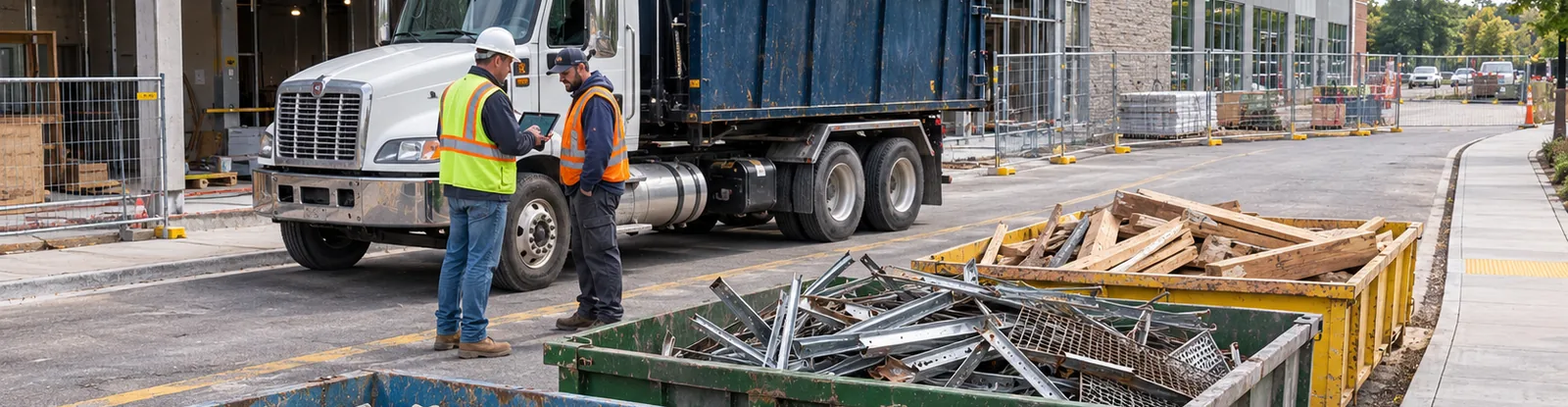
A tenant buildout finishes on one floor while a full demolition runs across town, and the roll-off for each was ordered by a different person, from a different hauler, on a different invoice.
For a general contractor, property manager or retail chain running renovations across several sites at once, construction debris removal usually gets handled the way it always has, one job, one container, one local vendor, repeated at every site with no connection between them.
For operations and facilities leadership overseeing that volume, the gap between that approach and a coordinated one shows up first in the invoice pile, and second in how much of that debris actually gets recovered instead of landfilled.
What Happens to C&D Debris Nationally
Construction and demolition debris is a bigger stream than most people assume, and most of it is already being recovered somewhere, just not necessarily on your jobs.
The EPA estimates the U.S. generated roughly 600 million tons of C&D debris in 2018, more than twice the volume of municipal solid waste. Of that, the EPA's own breakdown shows most of it finding a next use rather than a landfill, with concrete, brick and asphalt going into aggregate and road base, wood and metal going into manufactured products, and landfill accounting for a minority of the total rather than the default destination.
That national pattern is the argument for recovery at the job-site level too. The materials have markets. Whether a given job's debris reaches them is a function of sorting and logistics, not of the material itself.
Why Material Matters More Than the Dumpster
Not everything coming off a job site is the same kind of problem, and treating it as one mixed stream is usually what kills the recovery value. EPA's breakdown of typical C&D composition puts concrete and mixed rubble at roughly 40 to 50 percent of a project's debris, wood at 20 to 30 percent, drywall at 5 to 15 percent, and metals at 1 to 5 percent, a mix that varies by project type but is never actually one material.
| Material | Recovery Route | What Breaks It |
|---|---|---|
| Concrete, brick, block, asphalt | Crushed into recycled aggregate, road base, fill | Mixing with contaminated soil or non-masonry debris |
| Wood, lumber, pallets | Mulch, boiler fuel, or reuse where condition allows | Treated or painted wood mixed with clean lumber |
| Drywall, gypsum, insulation | Gypsum reprocessing where a regional outlet exists | Wet or heavily contaminated drywall, or no regional processor |
| Metals (rebar, steel, copper, fixtures) | Scrap recovery, often with real rebate value | Left embedded in concrete rather than separated on site |
| Roofing, shingles, siding | Asphalt shingle recycling where regionally available | Mixed with general demolition debris |
The pattern across every row is the same. Separation at the point of generation is what makes recovery possible downstream. A single mixed roll-off forecloses most of these routes before the material ever leaves the site.
What Breaks Down With Volume
One job site tolerates a casual approach. A portfolio of them exposes exactly where that approach costs money.
- Vendor fragmentation. A different hauler at every site means no standard recycling rate, no consistent reporting, and no way to compare one site's performance to another's.
- Invoice sprawl. Ten sites, ten invoices, and ten different billing cycles, and reconciling that against project budgets becomes its own administrative job.
- No portfolio-level data. Without a standard reporting format across sites, there's no way to know which jobs are recovering material well and which are quietly landfilling everything.
- Documentation gaps for closeout. LEED documentation, ESG reporting and project closeout all want diversion records, and a pile of mismatched hauler receipts is not that.
What a Coordinated Program Actually Standardizes
The fix isn't a bigger dumpster. It's the same four things, repeated consistently across every site instead of reinvented at each one.
- Assess each site before ordering containers. Volume, material mix and access constraints differ by job. Sizing a roll-off from habit rather than the actual project wastes either capacity or money.
- Standardize the cadence. One scheduling approach and one set of vetted recyclers across every site, rather than whoever the local vendor happens to be that week.
- Collect with documentation. Chain-of-custody and tonnage records at the point of collection, not reconstructed later from memory for a closeout report.
- Report and recycle consistently. One format for diversion data across every job, so a portfolio of projects produces comparable numbers instead of ten incompatible ones.
Where Waste Harmonics Keter Standardizes the Program
Waste Harmonics Keter runs construction and demolition debris as a managed program rather than a series of one-off hauls, with right-sized roll-offs, scheduled and on-call service, one point of contact, and one invoice across renovations, tenant buildouts, remodels and full demolitions at every site, not just the largest one.
Material-specific recovery follows the same standardized process. Concrete, for instance, goes through dedicated concrete recycling into crushed aggregate and road base, with rebar separated for scrap value, rather than treated as generic demolition debris. Chain-of-custody and tonnage records support the audit-ready reporting a multi-site portfolio needs for LEED and ESG documentation, the same kind of record a single job site rarely bothers to produce. Asbestos, lead paint and other hazardous materials are coordinated separately, outside this program's scope.
One Program, Not One Dumpster at a Time
Construction debris removal works fine as a one-off decision on a single job. It stops working as volume multiplies across sites, because fragmented vendors and inconsistent documentation cost exactly the recovery value the material was always worth. Standardize the cadence, separate the materials, and the debris pile becomes a reporting line instead of a mystery invoice.
Frequently Asked Questions
How is construction debris different from general hauling?
Construction debris is a distinct material mix, including concrete, wood, drywall, metal and roofing, with its own recovery routes that general municipal solid waste doesn't have. Treating a demolition roll-off like a regular trash pickup usually means those materials get landfilled together instead of separated for recovery, which is the main value left on the table.
Does construction debris mostly get recycled or landfilled?
Nationally, most of it finds a next use rather than a landfill. EPA data shows the majority of C&D debris generated in 2018 went into aggregate, manufactured products or other recovery routes, with landfill as a minority outcome. Whether a specific job's debris follows that pattern depends entirely on whether materials are separated on site.
How do you manage debris across several active job sites?
The core fix is standardization, with one scheduling cadence, one set of vetted recyclers, and one reporting format across every site, instead of a different local vendor and a different invoice at each one. That's what turns a pile of disconnected hauls into comparable, auditable data across a portfolio of projects.
Is asbestos handled the same way as regular debris?
No. Asbestos, lead paint and similar hazardous materials require separate, specialized coordination outside a standard construction debris program. Confirm how any provider handles that split before assuming one container or one process covers everything a demolition site generates.