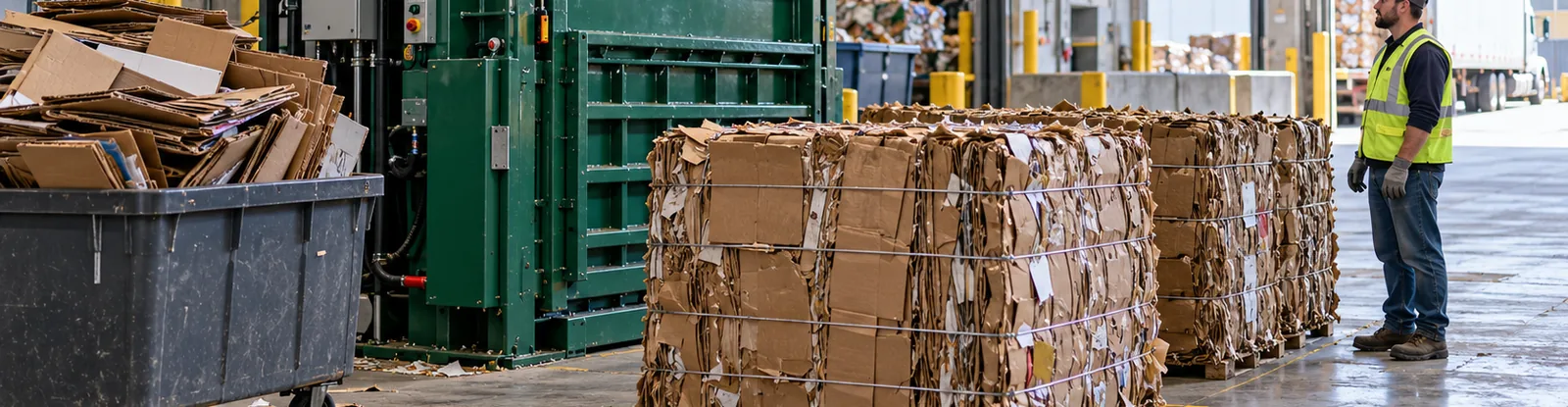
Open the compactor on an average Tuesday and the story is right there. Clean cardboard crushed in with the trash, a container hauled half full, a stream nobody has looked at since the contract was signed.
Most multi-site operators pay their waste invoices the way they pay for dial tone, automatically and without checking what the service actually covers. For operations and procurement leadership, a waste audit is the itemized reading of a bill that has been on autopilot for years, and it is the step that makes every later decision defensible instead of guessed.
What a Waste Audit Actually Reveals
An audit answers questions an invoice cannot. The invoice tells you what you were charged. The audit tells you what you are throwing away and why.
- Composition. What is really in the stream, and how much recoverable cardboard, film or organics is going to landfill as general waste, paying disposal rates to do it.
- Contamination. How much of the recycling is spoiled by the wrong material, which is what quietly downgrades a rebate or gets a load rejected.
- Right-sizing signals. Whether containers and pickup frequency match the actual volume, or whether you are paying to haul air.
- Behavior and placement. Where bins sit, what staff put where, and which fixes are signage and training rather than new equipment.
The EPA frames the purpose plainly. A waste assessment identifies the waste a facility generates and the management practices behind it, and pinpoints the areas and materials where waste reduction efforts will be most effective. It is a diagnosis before treatment.
The Three Ways to Run One
There is no single method, and the right one depends on how much certainty the decision needs. The EPA describes three, which can be used alone or together.
| Method | What It Involves | Best For |
|---|---|---|
| Records examination | Reviewing hauler invoices, weights and service history | A fast baseline of spend and volume |
| Facility walk-through | Observing bins, dock flow and signage in place | Spotting placement and behavior problems |
| Waste sort | Physically separating and weighing a sample of the waste | Hard composition and contamination data |
The records examination is where most audits should start, because the data already exists. The waste sort is the one that produces numbers you can defend, and it is the only method that reveals contamination a spreadsheet will never show. A thorough audit usually combines all three, records to size the problem, a walk-through to explain it, a sort to prove it.
Why Invoices Alone Are Not Enough
It is tempting to treat the hauler's paperwork as the audit. It is a start, but it has a blind spot the sort is built to cover.
Billing records show weight and frequency. They cannot show that a third of that weight was recoverable cardboard, or that the recycling stream was contaminated enough to be landfilled anyway. Larimer County's guidance makes the related point for diversion reporting. Where waste is shared between businesses or self-hauled, invoices do not capture it and a waste audit is needed to measure it directly. The number on the bill is an output. The audit is the only way to see the inputs.
How to Prepare for an Audit
A little preparation decides whether an audit produces a decision or just a report. Before anyone opens a bin, cover these four things.
- Pull the records first. Have the last 12 months of hauler invoices, weights and service schedules ready, so the sort has a baseline to sit against.
- Pick a representative window. A site in peak season and the same site in a quiet month are different facilities. Audit the week that reflects normal operations, or audit both and say which is which.
- Name the decision it feeds. An audit done to cut contamination looks different from one done to renegotiate a contract. Decide what the audit is for before it starts.
- Include the people who handle the waste. The dock and cleaning teams know where the surges and the bad habits are, and they are usually absent from the records.
The honest limit is that a one-day sort is a snapshot, and seasonality or an unusual week can skew it. That is a reason to anchor the sort against a full year of records, not a reason to skip it. The cost of an audit is time and access. The cost of not doing one is paying to haul and bury material you were never looking at.
The Waste-Profile Audit WHK Offers
Waste Harmonics Keter offers a no-obligation waste-profile audit as its entry point for prospective clients. Confirm up front that it covers the methods above, particularly a physical sort if you need composition data. On-site waste composition analysis is part of recycling and diversion, producing the contamination and capture data a sort is there to find.
From that baseline, two things follow. Container and pickup right-sizing moves into program optimization, where fill-level data replaces the guesswork an audit first exposes. And the findings become defensible numbers through reporting rather than a one-off document that ages on a shelf. The audit is the diagnosis. The program is the treatment the diagnosis justifies.
Nothing Improves Until You Look
Every other move in a waste program, whether cutting cost, raising diversion, renegotiating a contract or right-sizing a compactor, rests on knowing what is in the stream and what it costs. A waste audit is the one step that supplies that, and it is cheaper than almost any change it leads to. Start with the records you already have, add a sort where the decision needs proof, and stop running a program on a bill nobody has read closely in years.
Frequently Asked Questions
How long does a waste audit take?
It depends on the method. A records examination can be done in days from existing invoices. A facility walk-through is a matter of hours per site. A waste sort takes a crew most of a day per sample and is the most involved, because it means physically separating and weighing the material. Many programs start with records and add a sort only where a decision needs hard composition data.
What is the difference between a waste audit and a waste sort?
A waste sort is one method within a waste audit. The audit is the whole assessment (records, observation and sorting), while the sort is specifically the physical separation and weighing of a waste sample. The sort produces the composition and contamination numbers. The wider audit puts them in the context of spend, equipment and behavior.
Will a waste audit actually save money?
It identifies where savings are, which is the necessary first step, but the audit itself does not bank them. It commonly surfaces recoverable material going to landfill at disposal rates, over-serviced containers, and contamination that is costing rebate value. Acting on those findings is what produces the savings. The audit is what tells you they exist and how large they are.
How often should a multi-site operator audit waste?
A full composition sort is usually periodic rather than constant, often annual or tied to a contract cycle or a new diversion target. Records-based review can run continuously where fill-level monitoring is in place, since the data arrives on its own. The trigger for a fresh sort is a material change, such as a new site, a new stream, a new mandate, or a result that no longer matches the records.