
ESG stands for “Environmental, Social, and Governance.”
ESG is a holistic concept that advances the idea that the quest for sustainability extends beyond environmental concerns. ESG reporting provides stakeholders (investors, employees, customers, and suppliers) with a framework for managing risk. It also identifies opportunities for improvement. Companies that embrace ESG compliance and implement a comprehensive ESG strategy may see improved financial performance and boost operating profits by 60%.
ESG Components
ESG’s ‘environmental’ component addresses adverse environmental impacts by citing what an organization is doing to mitigate current or potential impacts.
Examples include:
- Greenhouse gas emissions (both direct and indirect impacts)
- Stewardship over natural resources
- Organization resilience in the face of climate change, fires, and flooding
The ‘social’ component speaks to an enterprise’s relationship with every stakeholder category. For example, when it comes to employees, are wages fair? And does management engage with workers to an appropriate degree? What is a company’s impact on the community in which it operates? What is the relationship with its supply chain partners? This is of particular interest where environmental and labor standards are inadequate.
‘Governance’ refers to an organization’s leadership and management. How well does an organization’s leadership align with shareholder rights? How well does it align with stakeholder expectations? Are there internal controls fostering transparency and accountability?

ESG represents a confluence of important considerations:
- Pollution and waste reduction
- Safety compliance
- Health issues
- Corporate philanthropy
Increasingly, stakeholders want to view an organization through ESG optics. ESG reporting helps an enterprise adapt amid changing social, economic, and environmental conditions.
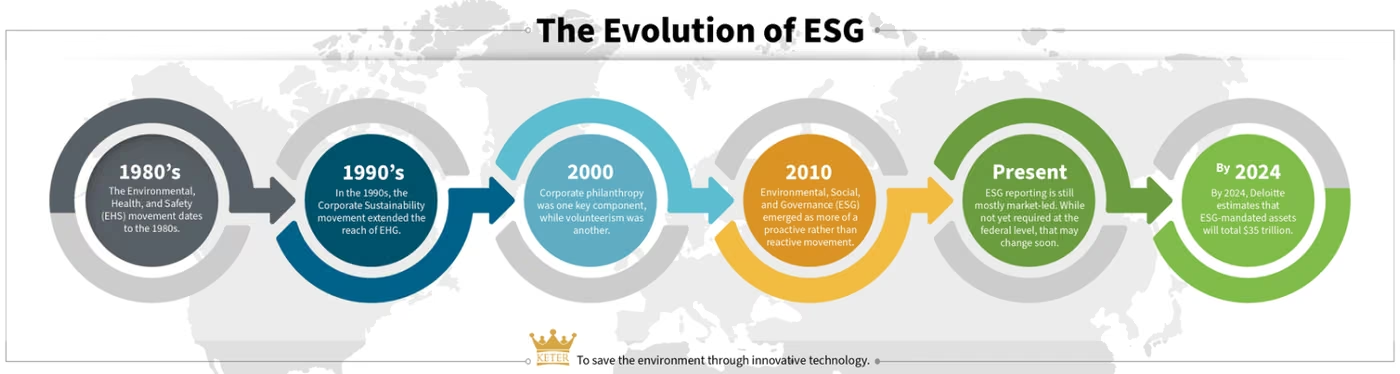
The Evolution of ESG
Today’s focus on ecological, social, and governance is the product of a decades-long evolution.
The Environmental, Health, and Safety (EHS) movement dates to the 1980s. Enterprises increasingly assessed labor and safety standards via a vis economic growth. In the 1990s, the Corporate Sustainability movement extended the reach of EHG. Management opted to go beyond what environmental regulations demanded. Unfortunately, this effort occasionally devolved into a marketing tool that overstated ecological accomplishments. Some called it greenwashing.
In the early 2000s, the Corporate Social Sustainability (CSR) movement increased its focus on responding to the social issues of the day. Corporate philanthropy was one key component, while volunteerism was another. By the late 2010s, Environmental, Social, and Governance (ESG) emerged as more of a proactive rather than reactive movement.
Credit the investment community for some of ESG’s emergence.
Reporting frameworks and rating agencies use it to deliver the transparency investors seek. Sometimes, ESG serves to enhance access to capital markets. Publicly-traded ESG investment vehicles help investors better align their values with their investments. These include everything from green bonds to ETFs and from mutual funds to index funds.
For example, ESG reporting has the support of the “Big Three,” BlackRock, Vanguard, and State Street. For example, BlackRock wants to see the use of two popular ESG frameworks – SASB and TCFD in order to allow BlackRock to manage ESG risk within its portfolio.
Meanwhile, both Vanguard and State Street have discussed their support of ESG investments and the use of the SASB and TCFD frameworks. State Street’s R-Factor score is based on the SASB framework. ESG reporting is still mostly market-led. While not yet required at the federal level, that may change soon. In Europe, there’s already a requirement that investment funds be classified as ESG or non-ESG.
In any case, ESG is here to stay.
More than seven out of ten CEOs see it as their responsibility to align ESG policies with customer values. By 2024, Deloitte estimates that ESG-mandated assets will total $35 trillion – about half of all professionally managed investments.
Waste & Recycling
A key element of a company’s ESG success is its commitment to sustainability. Waste reduction and recycling efforts make a significant contribution. And acquiring accurate, quantifiable waste and recycling data is essential.
Interested in learning more? Talk with a real person from our team.