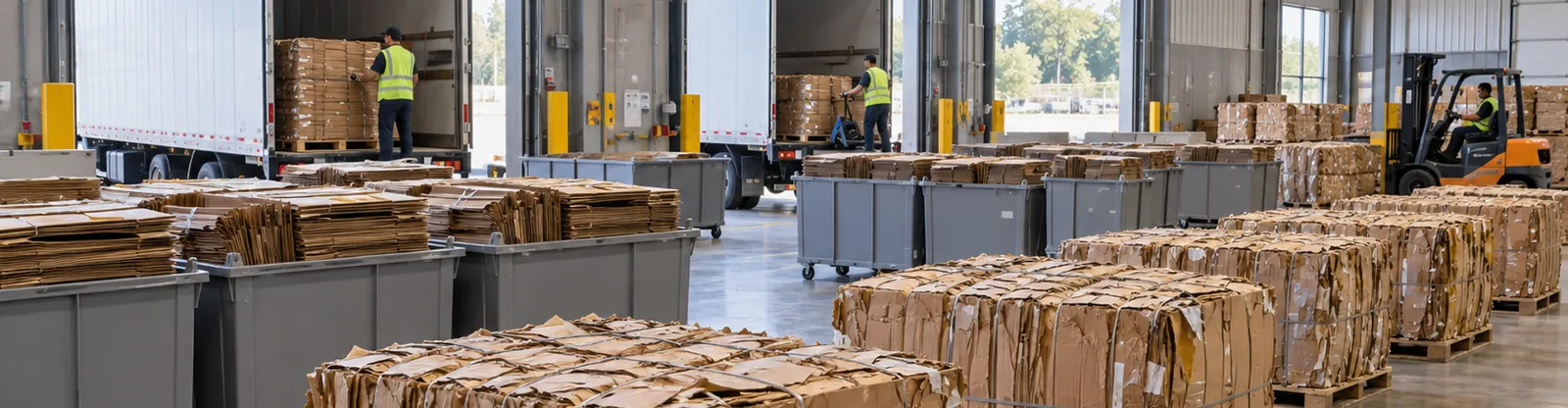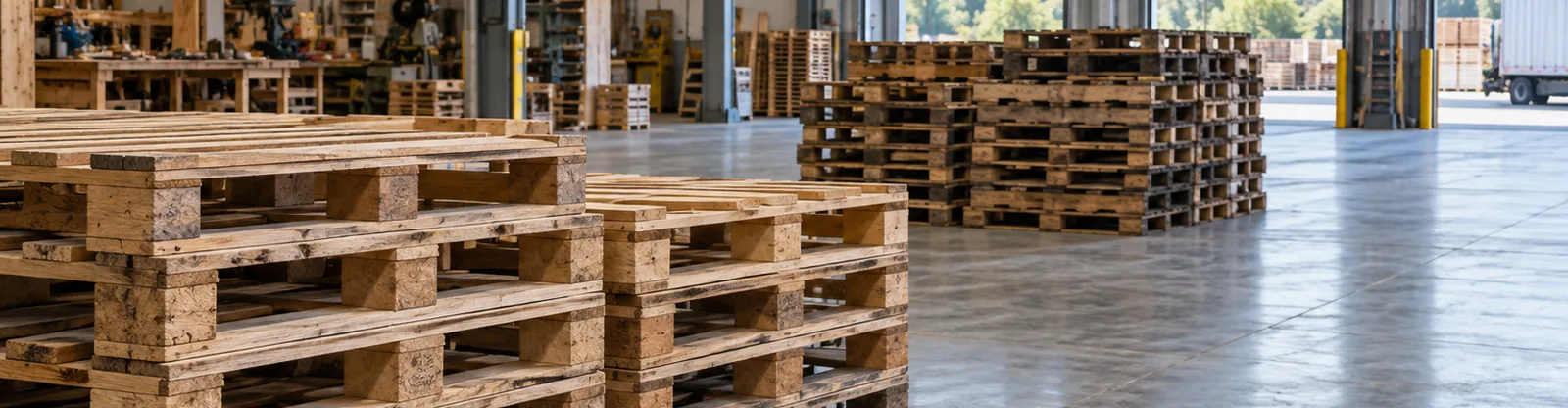
Is pallet recycling worth it for your business? Look beyond the pickup price. A well-designed program can reduce disposal costs, recover usable pallets, and free the dock space your receiving team needs.
For facility and procurement leaders, the value depends on pallet condition, volume, handling labor, and collection reliability. Here are the benefits to evaluate, and the operating conditions needed to turn them into measurable results.
Pallet Recycling Benefits at a Glance
Use these measures to compare your current disposal arrangement with a recovery program. Treat each benefit as something to verify against a baseline, rather than a guaranteed saving.
| Potential Benefit | What Enables It | What to Measure |
|---|---|---|
| Lower disposal costs | Accepted recovery routes and adjusted waste service | Total net cost, including handling |
| Recovered pallet value | Suitable condition, quantity, and market demand | Credits after fees and deductions |
| More usable space | Defined staging and dependable collection | Occupied area and repeat handling |
| Simpler coordination | Clear ownership and escalation rules | Missed pickups and administrative time |
| Stronger reporting | Consistent records and recovery definitions | Documented outcomes and data gaps |
Reduce the Cost of Disposing of Usable Material
Sending every unwanted pallet into the same disposal stream can mean paying to discard items that still have a useful life. Separating pallets for assessment creates an opportunity to reuse sound units, repair suitable damaged units, and route accepted material from unusable units into recycling.
The financial benefit comes from the change in total cost. A lower disposal bill is only part of the calculation: include collection, sorting, labor, equipment or trailer charges, and any rejected-material fees. If your existing waste collection contract has a fixed charge, removing pallets may not reduce that invoice until service is adjusted.
EPA’s commercial waste management guidance identifies waste tracking and assessment as a foundation for reducing costs and selecting suitable services. Start with pallet counts, current disposal expenses, and handling time so procurement can test the proposed improvement.
Recover Value Through Reuse and Repair
Pallet recovery is broader than material recycling. A reusable pallet remains a pallet; a repairable one may return to service after qualified assessment and repair. Material recycling processes a pallet that is no longer suitable for those routes into another usable material.
Think of a sturdy dining chair with a damaged leg: repairing it can preserve more of its original function than breaking it into raw material. Pallets need the same first question: can this unit be safely returned to its intended use? The answer requires appropriate inspection, not a quick decision based on appearance.
Dimensions, construction, condition, quantity, and local demand influence recovery value. A full load of consistent, accepted pallets may have different economics from a small mixed load with broken boards and unusual sizes. Ask the provider to explain its grading and pricing before including credits in a budget.
- Reusable units: Confirm acceptance criteria and who determines suitability for reuse. Keep ownership or return obligations attached to the pallets.
- Repair candidates: Ask which defects the recovery partner accepts and how repaired units are assessed for their intended service.
- Material recycling: Identify the accepted wood or plastic stream, processing destination, and documentation available.
- Exceptions: Separate contaminated or otherwise questionable units for review. Do not assume every pallet is eligible for the same route.
Pallets belonging to a rental pool, supplier, or customer may need to be returned through that owner’s process. Verify ownership before authorizing sale, repair, or recycling.
Reclaim Space and Reduce Repeated Handling
A pallet pile occupies more than its footprint. It can narrow staging areas, make inventory harder to access, and force employees to move the same units repeatedly while waiting for collection. A predictable recovery schedule lets facility teams assign a defined accumulation area and plan around it.
Measure the space occupied before and after the change, along with the time employees spend relocating pallets. Reclaimed space is operational capacity; it becomes a direct financial saving only if it avoids a real expense or supports a measurable improvement.
Under OSHA’s materials-handling standard, aisles used with mechanical handling equipment must remain clear, and stored materials must be stable and secure. Regular pallet removal can support housekeeping, but it does not replace appropriate stacking, inspection, fire protection, or site-specific safety procedures.
Set a collection trigger before the designated storage area fills. Agree on the process for seasonal surges so a busy receiving week does not turn into an improvised storage plan.
Make Pickup Coordination More Predictable
An informal arrangement may work until the collector changes its route or stops accepting part of the load. The facility then inherits the sorting, phone calls, and storage problem. A defined collection service makes responsibilities visible before that disruption occurs.
The uncomfortable call is familiar: a receiving manager tells procurement that a trailer cannot unload because the pallet staging area has spread across the dock. Procurement has a low pickup quote, but nobody has a confirmed recovery time. The cost now includes lost receiving capacity and extra handling.
A useful agreement specifies the collection window, accepted materials, loading responsibility, extra-service pricing, and escalation contact. It should also explain what happens after a missed pickup or rejected load.
- Collection model: Compare live loading with a drop trailer where site access, space, and volume make it feasible.
- Site responsibilities: Specify sorting, stacking, loading, access, and the person authorized to request additional service.
- Service recovery: Distinguish acknowledgment of a complaint from a commitment to complete the missed collection.
- Evidence and billing: Require collection records and support for deductions, waiting charges, or unsuccessful service attempts.
Build More Defensible Recovery Reporting
Pallet counts provide a starting point, but they do not by themselves establish recycled tonnage. A good report distinguishes units returned for reuse, sent for repair, processed for material recovery, and rejected or disposed of. Avoid counting the same pallet more than once across those stages.
Ask how any weight conversion is calculated, whether weights are measured or estimated, and what records show the downstream outcome. A truck leaving the site proves collection; the recovery claim needs supporting information about what happened next.
For corporate teams, consistent definitions make comparisons between locations more useful. WHK’s reporting and sustainability service is a relevant place to discuss how pallet activity would fit your wider program; request a sample report and confirm the fields included in the proposed scope.
Keep environmental claims proportional to the evidence. Reporting recovered units or documented material weight is more defensible than assigning carbon savings without an appropriate method and the necessary operating data.
Simplify Pallet Programs Across Multiple Sites
A regional warehouse, manufacturing plant, and retail distribution center may need different pickup arrangements. They can still share one set of acceptance records, billing controls, service measures, and escalation rules.
Central coordination can reduce the time procurement spends resolving inconsistent invoices and chasing separate vendors. Facility teams should retain clear local instructions: where pallets go, who requests collection, and how rejected material is handled.
A managed waste and recycling program can provide a framework for coordinating those responsibilities. Evaluate it on service completion, invoice accuracy, visibility into recovery routes, and the administrative workload it removes, not simply the number of vendors on the contract.
Measure the Economic Trade-Off Honestly
Sorting pallets more carefully can improve recovery options, but it adds labor. Holding material for a larger collection may improve transport economics while consuming valuable dock space. More frequent pickups can relieve that pressure while increasing service charges. There is no universal lowest-cost configuration.
Compare the same period under both arrangements. Current cost includes disposal, handling, and avoidable disruption. Proposed cost includes collection, sorting, storage or trailer charges, remaining disposal, and administration, less documented credits. Include a conservative case with no rebate so the business understands its exposure.
Avoid buying processing equipment or committing to a large service package before confirming volume and the receiving market. Start with representative site data and review actual collections, charges, and handling time after launch.
How Waste Harmonics Keter Supports Pallet Recovery
Waste Harmonics Keter’s pallet recovery and recycling service assesses pallet volume, material mix, dock flow, and existing costs. Its published service options include dock sweeps, sorting, repair, on-site labor, and drop-trailer or live-load collection, with the arrangement matched to the operation.
WHK also describes collection documentation and consolidated reporting of counts, recovery, and diversion across locations. Standard wooden pallets, odd sizes, broken units, and plastic pallets can require different recovery routes. Rebate eligibility depends on condition and market availability.
Use the assessment to agree on measurable commitments: collection cadence, acceptance rules, site responsibilities, net cost, and reporting evidence. That gives facility teams a workable pickup process and procurement a basis for reviewing performance.
Turn Pallet Recovery Into an Operating Improvement
The strongest benefits of pallet recycling come from matching recovery routes and collection service to the way your facility works. Start by counting what you generate, confirming ownership and condition, and measuring current handling and disposal costs. Then request a program that makes the expected benefits visible in both operations and reporting.
Frequently Asked Questions
Can Businesses Earn Money From Pallet Recycling?
Some pallet streams qualify for credits, but payment is not guaranteed. Accepted dimensions, condition, quantity, local demand, and collection costs affect the result. Request the grading rules, deductions, and settlement terms, then compare the credit with the full service cost.
Can Broken Pallets Still Be Recycled?
Some damaged pallets can be repaired; others may be accepted for material recycling. The provider must assess the construction, damage, contamination, and available receiving outlets. Keep questionable units separate and confirm acceptance before including them in a load.
How Often Should a Business Schedule Pickup?
Base collection on generation rate, safe storage capacity, loading arrangements, and seasonal peaks. Agree on a trigger for extra service before the designated area fills. The best schedule balances transport cost with the cost of storage and repeated handling.
What Records Should a Pallet Recycler Provide?
Request collection dates, site identification, pallet counts or weights with the measurement method, accepted and rejected quantities, charges or credits, and evidence supporting the reported recovery route. Keep reuse, repair, material recycling, and disposal distinct in the reporting.