Your hazardous waste records can be challenging to navigate. Ensuring accurate records is crucial not only for compliance but also for maintaining high environmental quality. How do you determine your category, follow the right regulations, or decide what types of waste to include in your report? By following these steps, your company can create a comprehensive hazardous waste record. This record satisfies regulatory requirements and contributes to effective environmental responsibility.
Who Must Report Waste Activity?
If your facility stored, treated, or disposed of hazardous waste on-site, regulations in the Resource and Conservation Recovery Act (RCRA) likely apply to you. One requirement is reporting your hazardous materials metrics to the Environmental Protection Agency (EPA). This reporting information is vital for both compliance and environmental safety.
The EPA regulates companies based on how much hazardous waste they generate monthly. Large Quantity Generators (LQG) must submit a Biennial Hazardous Waste Report to the EPA every two years. To facilitate this reporting, companies can utilize the RCRAInfo system, a comprehensive electronic reporting system for hazardous waste management. Although small-quantity generators of hazardous waste don't need to submit biennial reports, state reporting requirements might still apply to them.
5 Kinds of Hazardous Waste to Account For in Your Report
From industrial byproducts to chemical residues, properly documenting hazardous materials is imperative for regulatory compliance and environmental stewardship. Under the federal Resource Conservation and Recovery Act (RCRA), the EPA identifies hazardous waste in two main ways, as listed waste or characteristic waste, and a few other categories carry their own handling and reporting rules. Here are five you are most likely to encounter:
1. Listed Waste
Listed hazardous waste is waste the EPA has specifically named on one of four lists (40 CFR Part 261, Subpart D). If your waste appears on a list, it is hazardous by definition, regardless of its measured characteristics.
- F-List: This list is for non-specific source waste from common manufacturing processes across industries. Examples include spent solvents, used oil, wastewater treatment sludges, and certain discarded commercial chemical products.
- K-List: The K-list includes source-specific wastes from identified industries, such as petroleum refineries or pharmaceutical manufacturing. Examples include wastewater treatment sludges containing commercial chemical products and unused chemicals or solvents.
- P-list: The P-list covers specific discarded commercial chemical products that are acutely hazardous, meaning dangerous even in small amounts. Examples include certain pesticides and pharmaceuticals.
- U-list: The U-list covers discarded commercial chemical products that are toxic or otherwise hazardous but not acutely so. It includes many off-spec, unused, or spilled solvents, reagents, and other chemicals. The U-list is the fourth listed-waste category and is the one most often overlooked.
2. Characteristic Waste
Waste can still be hazardous even if it does not appear on the F-, K-, P-, or U-lists. Characteristic waste is identified by testing or process knowledge against four measurable properties. If a waste exhibits one or more of these characteristics, RCRA regulates it as hazardous.
- Ignitability: Waste that can catch fire easily is considered ignitable. This category includes liquids with a flashpoint below 60 degrees Celsius (140 degrees Fahrenheit) and certain solids.
- Corrosivity: Corrosive waste can corrode metal containers, such as storage tanks and drums. Materials with a pH less than or equal to 2 or greater than or equal to 12.5 are typically considered corrosive.
- Reactivity: Reactive waste is unstable and may react violently or generate toxic gasses when exposed to water, air, or other substances. Examples include explosives, water-reactive materials, and cyanide- or sulfide-bearing waste.
- Toxicity: Waste becomes classified as toxic when it contains certain substances in high concentrations. Laboratory testing often determines toxicity, and specific criteria are established for various substances.
3. Universal Waste
Universal waste is a specific set of widely generated hazardous items that the EPA regulates separately under streamlined rules (40 CFR Part 273). Rather than the full hazardous-waste requirements, these rules encourage proper collection and recycling. Four federal universal-waste streams apply nationwide, and some states add more:
- Fluorescent lamps: Fluorescent tubes and bulbs contain small amounts of mercury, a hazardous substance. Universal waste regulations make it easier for businesses to collect and recycle these lamps.
- Batteries: Certain types of batteries, including nickel-cadmium (Ni-Cd), lead-acid, and some lithium batteries, are classified as universal waste. Recycling programs are encouraged to recover valuable materials and reduce environmental impact.
- Pesticides: Manufacturers or registrants can manage certain unused or recalled pesticides, part of a voluntary recall, as universal waste. This category simplifies the handling and disposal of these pesticides.
- Mercury-containing equipment: Certain devices and equipment containing mercury, such as thermostats and certain switches, are considered universal waste. These items can be collected and recycled to prevent mercury release into the environment.
4. Mixed Waste
In RCRA terms, “mixed waste” has a precise meaning: waste that contains both RCRA hazardous waste and radioactive material. It is not simply two hazardous wastes combined. Because two regulatory frameworks apply at once, mixed waste is jointly governed by the EPA (for the hazardous portion) and the Nuclear Regulatory Commission or an Agreement State (for the radioactive portion), and it carries added storage, tracking, and reporting requirements. It is most common in laboratory, medical, research, and nuclear settings.
5. Electronic Waste (E-Waste)
Discarded electronics can be hazardous because of heavy metals such as lead and mercury, flame retardants, and other harmful materials. Many electronics that fail a characteristic test are managed as universal waste or under specific state e-waste laws rather than as fully regulated hazardous waste, but they still need to be tracked and reported. Improper disposal can release these substances into the environment. E-waste includes:
- Monitors and televisions: Older monitors and TVs contain leaded glass, which is hazardous. Lead can pose environmental and health risks, especially if these devices are improperly recycled.
- Printed circuit boards: Circuit boards are commonly found in electronic devices and often contain hazardous substances such as lead, cadmium, and brominated flame retardants. Recycling methods must be employed to extract valuable materials and minimize environmental impact.
- Persistent organic pollutants. Certain electronic components, particularly in older devices, may contain persistent organic pollutants such as polychlorinated biphenyls (PCBs), which do not break down readily and pose health risks.
How to Create a Hazardous Waste Report
Creating a hazardous waste report involves several specific steps. These steps ensure compliance with regulations and provide accurate information about hazardous materials waste activity. Below are the key steps for a company to create a hazardous waste report:
Hazardous Waste Identification
Companies must clearly identify and characterize all hazardous waste streams, a process that directly contributes to the accuracy of their annual report. This task involves understanding the properties and composition of the waste materials.
Regulatory Determination
Different jurisdictions may have specific rules and reporting obligations. Take the time to identify the regulatory and notification requirements that apply to your company's hazardous waste.
Accumulation and Storage
Implement proper procedures for the accumulation and temporary storage of hazardous waste on-site. Be sure to comply with storage conditions and time limits.
Hazardous Waste Sorting
Classify and categorize waste materials according to regulatory definitions to determine if they are hazardous. This process involves assessing the components and characteristics of the waste and comparing them to regulatory criteria.
Record Keeping
Our technology helps you maintain detailed records of hazardous waste generation, including the types and quantities produced, storage locations, and accumulation dates. Accurate reporting information is essential for creating a comprehensive hazardous waste report. Additionally, maintaining these detailed records simplifies the preparation of your facility's annual report. For efficient record keeping, integrating with the RCRAInfo system can streamline the process, ensuring up-to-date and accessible records.
Tracking
Your manifest system should track the movement of hazardous waste from its origin to its final treatment or disposal facility. To comply with audits, systems must be in place to complete and retain copies of hazardous waste manifests.
Report Submission
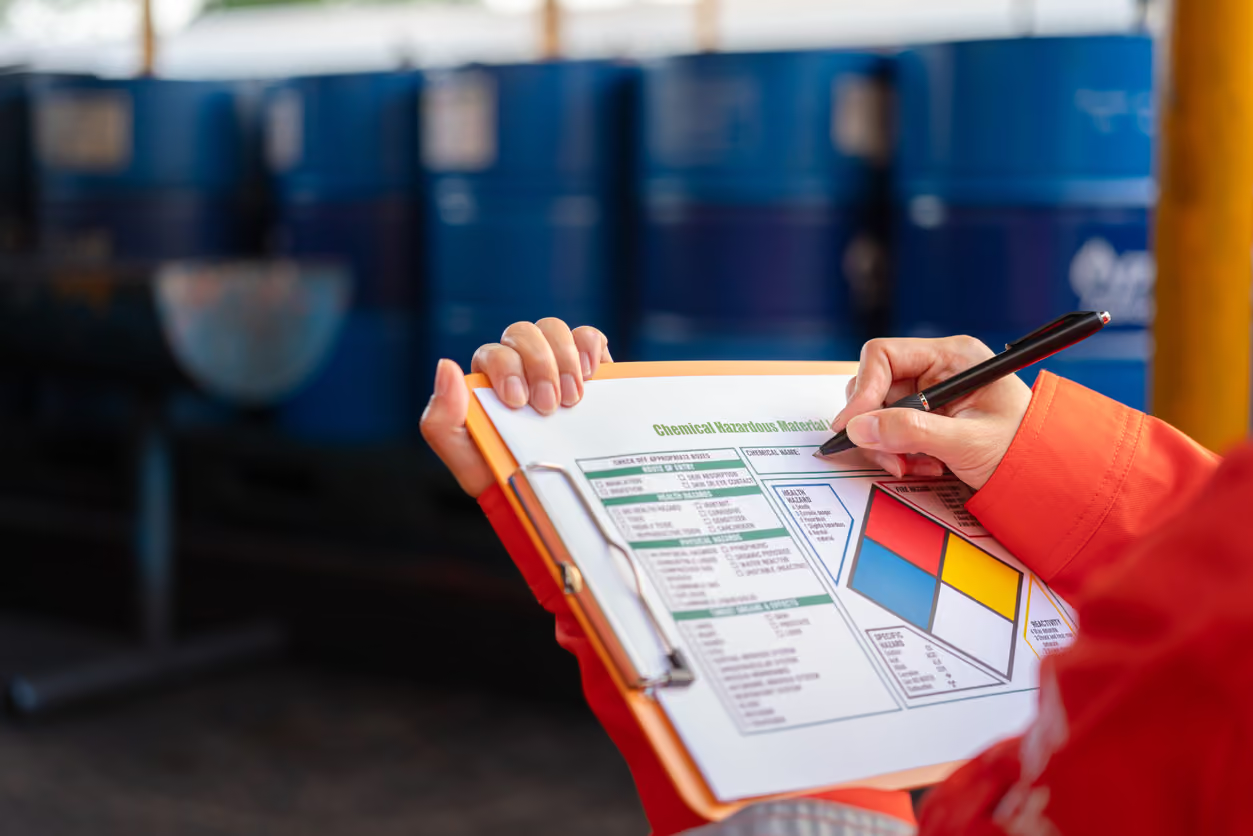
Complete the necessary reporting forms required by regulatory authorities. The report form must be filled out using the Uniform Hazardous Waste Manifest. Federal regulations require your facility’s EPA ID number, hazardous waste type and quantities, and whether those materials were stored, recycled, treated, or sent for disposal. Submitting these reports through the RCRAInfo system can simplify the process, providing a centralized platform for managing and tracking hazardous waste reports. You should also consider preparing an annual report for any state agencies that have set hazardous materials requirements.
Let Us Help With Your Hazardous Waste Compliance
As you can see, it takes considerable expertise to navigate complex regulations surrounding hazardous waste reporting. It's important to consult with environmental professionals for guidance tailored to your company's location and industry.
Expert guidance enhances safety measures, minimizes environmental impact, and fosters a sustainable corporate image. Ultimately, seeking help in hazardous waste reporting is a proactive strategy for businesses to align with legal requirements and demonstrate commitment to environmental responsibility.
If you need help with the challenges of hazardous waste reporting, WHK is here for you! Contact us today to find out how we can streamline your waste handling, tracking, and reporting.