Choosing a cardboard recycling service? Start with three questions: Will pickups keep pace with your operation, what will the full service cost, and who handles problems when the loading dock fills up?
For facility and procurement leaders, the right provider must fit the material, space, and workload at each site. Use this guide to compare collection options, test vendor proposals, and build a program your team can actually run.
Compare Cardboard Recycling Services at a Glance
Ask every shortlisted provider to quote the same operating conditions. A low collection rate means little if the proposal assumes different volumes, equipment, or material quality.
| Selection Factor | Ask the Provider | Evidence to Request |
|---|---|---|
| Material acceptance | Which grades and conditions qualify? | Written acceptance and rejection rules |
| Collection reliability | What happens after a missed pickup? | Service windows and escalation process |
| Equipment fit | Does the site need loose collection or baling? | Site assessment and handling requirements |
| Full cost | What sits outside the quoted pickup rate? | Itemized proposal and credit formula |
| Reporting | How are weights and destinations documented? | Sample report and supporting records |
| Contract flexibility | How can service change with demand? | Adjustment, renewal, and exit terms |
Define Your Cardboard Stream Before Requesting Quotes
Start with what leaves the unpacking area. Old corrugated containers, commonly called OCC, include the corrugated shipping boxes used throughout warehouses and commercial facilities. Paperboard, coated packaging, and mixed materials may require different handling; ask providers to identify what their receiving facilities accept.
Build a baseline using representative normal and peak operating periods. EPA’s commercial waste management guidance recommends tracking waste and assessing the materials your operation generates before evaluating improvements. Give bidders the same baseline so their proposals are comparable.
- Volume and variability: Record available weights, current container sizes, collection frequency, and seasonal surges. Separate measured weights from estimates.
- Material condition: Identify wet boxes, food residue, plastic wrap, and other materials entering the cardboard stream. Photograph typical loads for vendor review.
- Handling effort: Track the time employees spend breaking down boxes, moving material, and clearing temporary storage. Include every shift.
- Site constraints: Document dock access, collection windows, available space, and equipment access. Note landlord requirements and shared loading areas.
For multiple locations, avoid using the largest warehouse as the template for every site. A retail backroom and a distribution center can need different collection arrangements even under one contract.
Match Collection and Equipment to the Operation
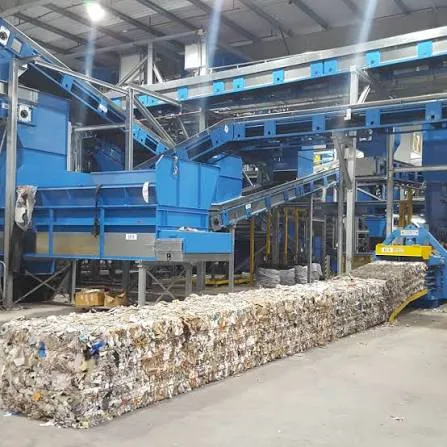
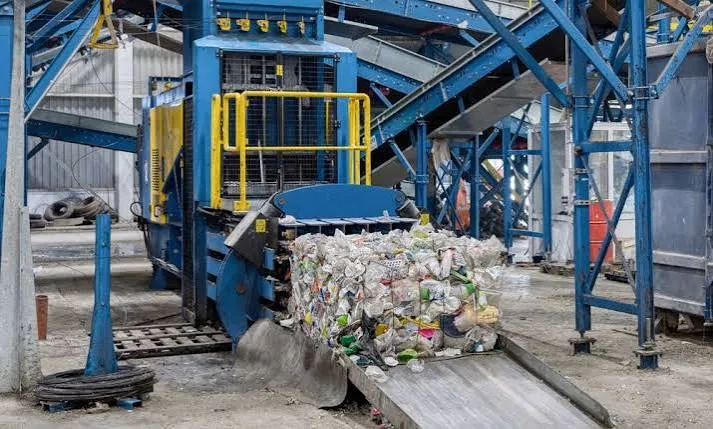
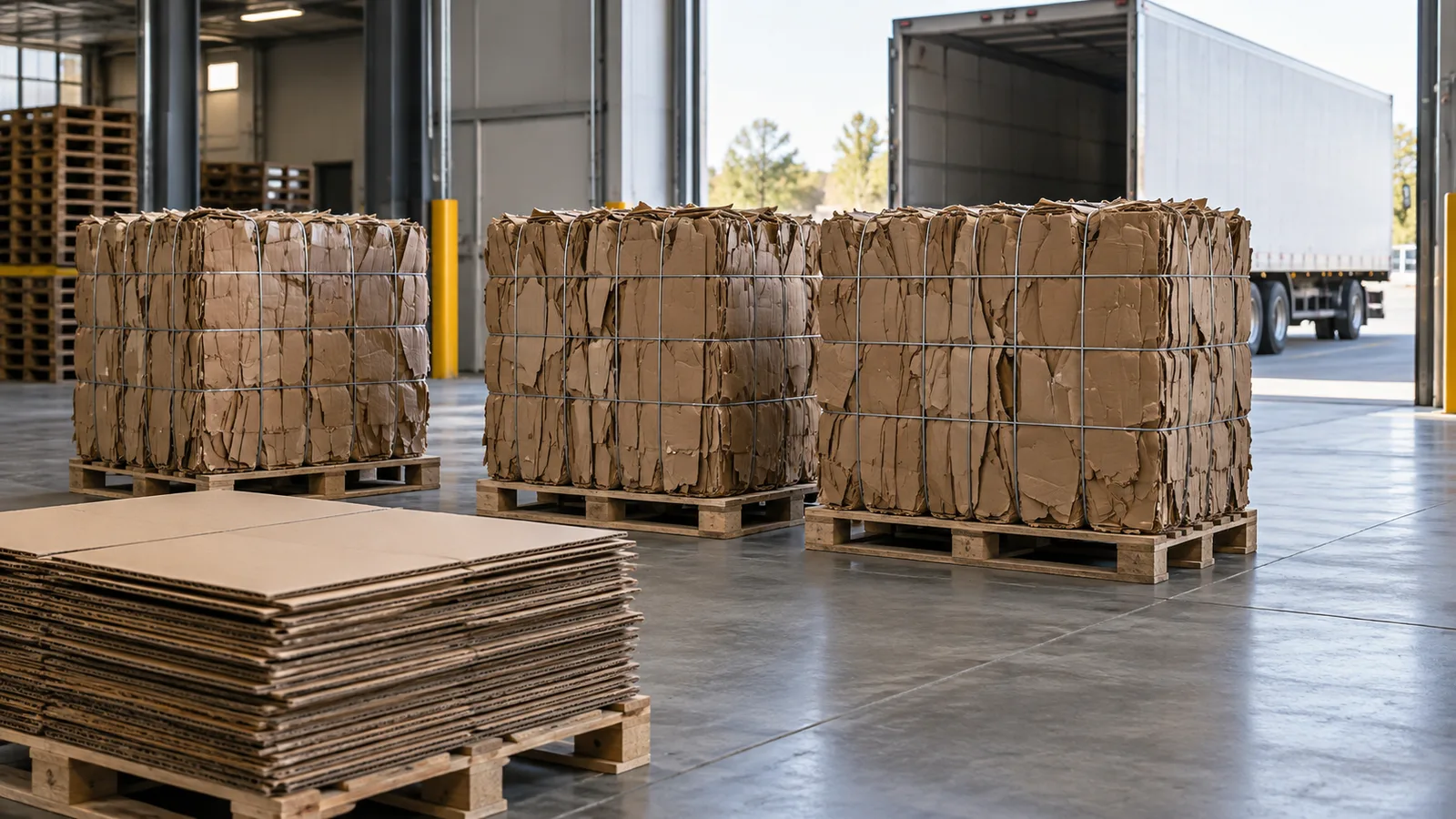
Loose collection can suit sites where volume and available storage make it practical. Baling can reduce the space occupied by cardboard, but it adds equipment, handling steps, and maintenance responsibilities. Ask for a site-specific comparison instead of assuming every facility needs a baler.
The choice is like packing a moving truck: flattened, organized boxes use space more efficiently, but somebody still has to do the packing. Evaluate the labor needed to prepare cardboard alongside any projected reduction in collection trips.
Check the Entire Handling Process
For a proposed baler, confirm loading requirements, throughput under your material conditions, finished bale dimensions and weight, and the recycler’s acceptance specifications. Check power, installation, access clearances, and the equipment needed to move and load completed bales. Nominal machine capacity alone does not establish how well the workflow will perform.
Ask who provides training, maintains the equipment, responds to breakdowns, and arranges interim collection. Waste Harmonics Keter’s equipment and compactor services include equipment assessment, installation coordination, and managed maintenance; confirm the exact scope in your proposal.
Storage is also an operating constraint. OSHA’s materials-handling standard requires clear aisles and passageways where mechanical handling equipment is used, along with stable, secure storage. A pickup schedule that depends on piling cardboard into travel paths is a poor fit for the site.
Get Material Acceptance Rules in Writing
“We recycle cardboard” is too vague for a service agreement. Request the receiving facility’s requirements for accepted grades, moisture, contamination, and preparation. Confirm how tape, staples, liners, waxed or coated boxes, and food-soiled packaging are handled rather than assuming all packaging belongs in one stream.
Turn those requirements into a short sorting procedure at the point where employees unpack goods. Keep the instructions specific to your actual materials and receiving facility. If rejected loads trigger extra sorting, disposal, or transport charges, the proposal should state how those charges are calculated and approved.
Ask for a documented dispute process: photographs, inspection findings, weights, and a contact who can explain a deduction. Procurement should not have to choose between paying an unexplained contamination fee and chasing three different parties.
Test Pickup Reliability Before Signing
A collection schedule should reflect how fast cardboard accumulates and how much approved storage space remains between pickups. Establish regular service windows, peak-period options, and a trigger for requesting extra collection before material begins crowding the dock.
Picture the call nobody wants to make: your receiving supervisor tells a carrier the dock is still occupied because yesterday’s cardboard pickup never arrived. The supplier is waiting, your team is moving boxes twice, and procurement wants to know why the cheaper contract is disrupting inbound freight.
Ask the provider to walk through that scenario. Who acknowledges the missed pickup? Who dispatches recovery service? What response is committed in writing, and what costs apply? Distinguish a customer-service response target from an actual collection commitment.
For a multi-site program, request a clear escalation owner and site-level performance records. National coverage is useful only if local collection capacity, communication, and backup arrangements support each location.
Compare Total Cost, Not Just the Pickup Rate
Use one calculation across all proposals: collection and transport charges, plus equipment, handling labor, maintenance, and other fees, minus documented recycling credits. Compare the same time period, tonnage assumptions, and service scope.
- Recurring charges: Identify collection fees, equipment rental, minimum service charges, and administrative costs.
- Variable charges: Ask about fuel adjustments, extra pickups, blocked access, waiting time, contamination, and rejected loads.
- Equipment responsibilities: Confirm installation, electrical or site work, consumables, repair coverage, and removal charges.
- Recycling credits: Request the grade, pricing basis, payable weight, deductions, settlement timing, and any minimum shipment requirement.
- Exit and change terms: Review renewal, cancellation, rate changes, and the process for adjusting service as volumes change.
A cardboard rebate is not the same as a profitable program. Material quality, recoverable quantity, transport, and commercial terms affect the result. Ask for an example settlement statement with confidential details removed, then trace how the stated credit reaches the invoice.
Test the economics without assuming a favorable commodity price. If the proposal only makes sense with a strong rebate every month, procurement needs to understand who carries that risk. Avoid treating projected credits as guaranteed savings.
Require Reporting You Can Reconcile
Ask for a sample monthly report before signing. It should let your team connect a site and service date to material type, weight basis, destination, and relevant charges or credits. Identify whether weights come from scale tickets, another measurement, or an estimate.
Collection records alone do not prove every collected pound was recycled. Ask how the provider accounts for contamination, rejected material, and downstream processing, and what evidence supports any diversion claim. Keep the reporting definition consistent across sites and reporting periods.
For broader oversight, a managed waste and recycling program can provide a single coordination point across locations. Make report access, data ownership, correction procedures, and the level of destination documentation part of the scope.
Balance Service Cost Against Operational Exposure
Buying more equipment or collecting too frequently can tie up money without improving the operation. Under-sizing service can shift the cost into overtime, repeated handling, emergency collections, and lost dock capacity. Neither cost disappears because it sits outside the recycling invoice.
Choose the least costly arrangement that can reliably handle the site’s real workload, including predictable peaks. For a large rollout, consider a representative pilot with agreed measures: completed pickups, overflow incidents, handling time, total net cost, and reporting completeness. Review results before applying the same design everywhere.
How Waste Harmonics Keter Supports Your Program
Waste Harmonics Keter’s cardboard recycling service starts with site volume, existing equipment, haulers, and costs. Its published approach includes right-sizing collection, using balers or roll-off containers where warranted, and coordinating pickups through vetted recyclers.
The program also describes pickup weights, chain-of-custody records, and consolidated activity and diversion reporting. For procurement, these are practical evaluation points: fewer vendor handoffs, clearer invoice reconciliation, and records that support internal reporting. Ask the team to demonstrate the reporting and define the service responsibilities for your locations.
Evaluate the proposal against your baseline, with agreed pickup expectations, equipment coverage, and cost assumptions. High-volume sites may recover material value, but any projected credit should be supported by the actual material quality and contract terms.
Choose a Service Your Facility Can Run
The right cardboard recycling provider should explain how material moves through your site, how service failures are resolved, and how the full cost is calculated. Start with a site assessment and request a proposal that connects those details to measurable responsibilities. That gives your facility team a workable process and procurement a defensible decision.
Frequently Asked Questions
Does My Facility Need a Cardboard Baler?
Not necessarily. Compare cardboard volume, storage, labor, collection frequency, and the receiver’s bale specifications. A baler may improve handling and transport efficiency at sufficient volume, but equipment, power, maintenance, and bale movement must fit the site. Ask for loose-collection and baled-service options where both are feasible.
Will a Recycler Pay for Our Cardboard?
Possibly, but payment is not guaranteed. Quantity, grade, contamination, transport, and market-linked contract terms influence net value. Request the pricing formula and all deductions in writing. Compare the final program cost after collection and equipment charges, not just a quoted price per ton.
Can Wet or Coated Cardboard Go in the Same Stream?
Get written acceptance rules from the provider for the receiving facility. Wet, heavily soiled, or specially coated packaging can create quality or processing problems, and acceptance varies. Separate questionable material until the provider confirms how it should be handled and what rejection charges apply.
What Should a Multi-Site Recycling Contract Include?
Specify site-level service, accepted materials, equipment responsibilities, pickup escalation, pricing adjustments, and reporting methods. Include how new sites are added and how service changes are approved. Require one accountable contact without losing visibility into the local haulers and receiving facilities serving each site.