TL;DR: Start with a verified waste inventory, then match separation, storage, equipment, and pickups to each stream. Assign onsite and provider responsibilities before launch. Compare complete costs and track service records. Keep hazardous or unverified materials outside the ordinary collection program.
Non-hazardous waste management needs a clear plan when packaging piles beside the receiving dock and the next shift has nowhere to put it. At a big facility, small collection gaps quickly become operational problems.
This guide helps operations leaders, plant managers, and procurement teams build a workable setup. It covers waste identification, collection points, equipment, pickup schedules, responsibilities, costs, and provider selection so you can organize service around the work your site actually does.
What Does Non-Hazardous Waste Management Include?
A complete program covers more than hauling away a full container. It connects the waste generated by your operation with appropriate onsite handling, accepted collection arrangements, recycling or disposal destinations, and records of the work completed.
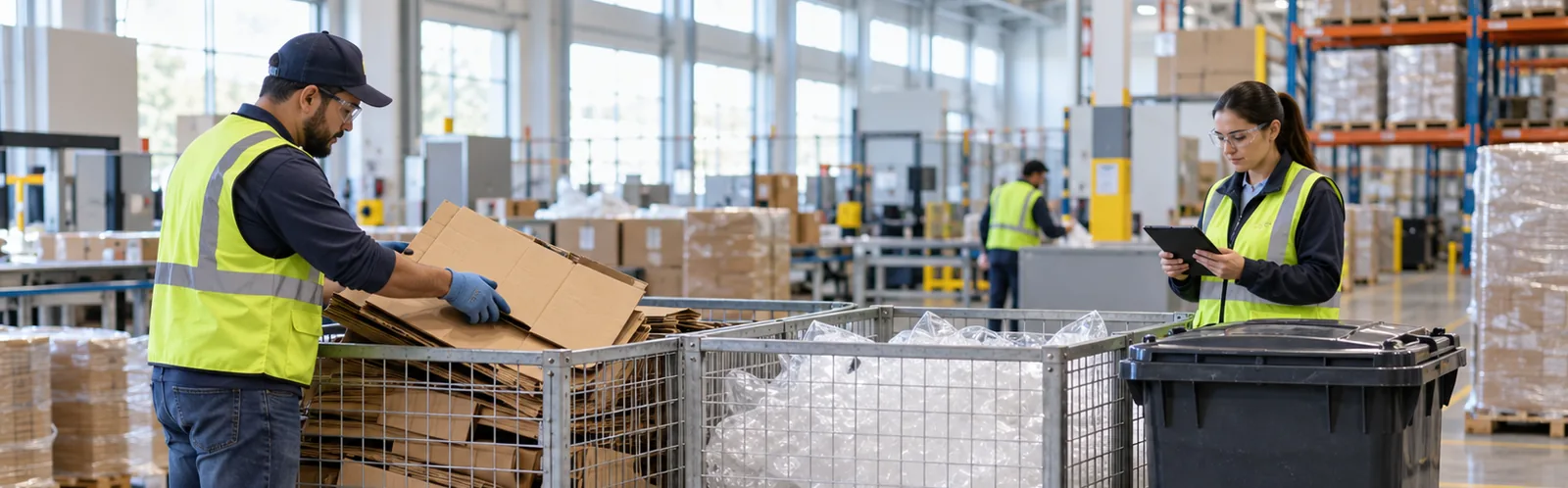
Large facilities may need several routes: general refuse from staff areas, cardboard from receiving, clean film from unpacking, and verified non-hazardous production materials. Each route needs an agreed scope. Non-hazardous classification alone does not mean a material can go into any dumpster or be accepted by any receiving facility.
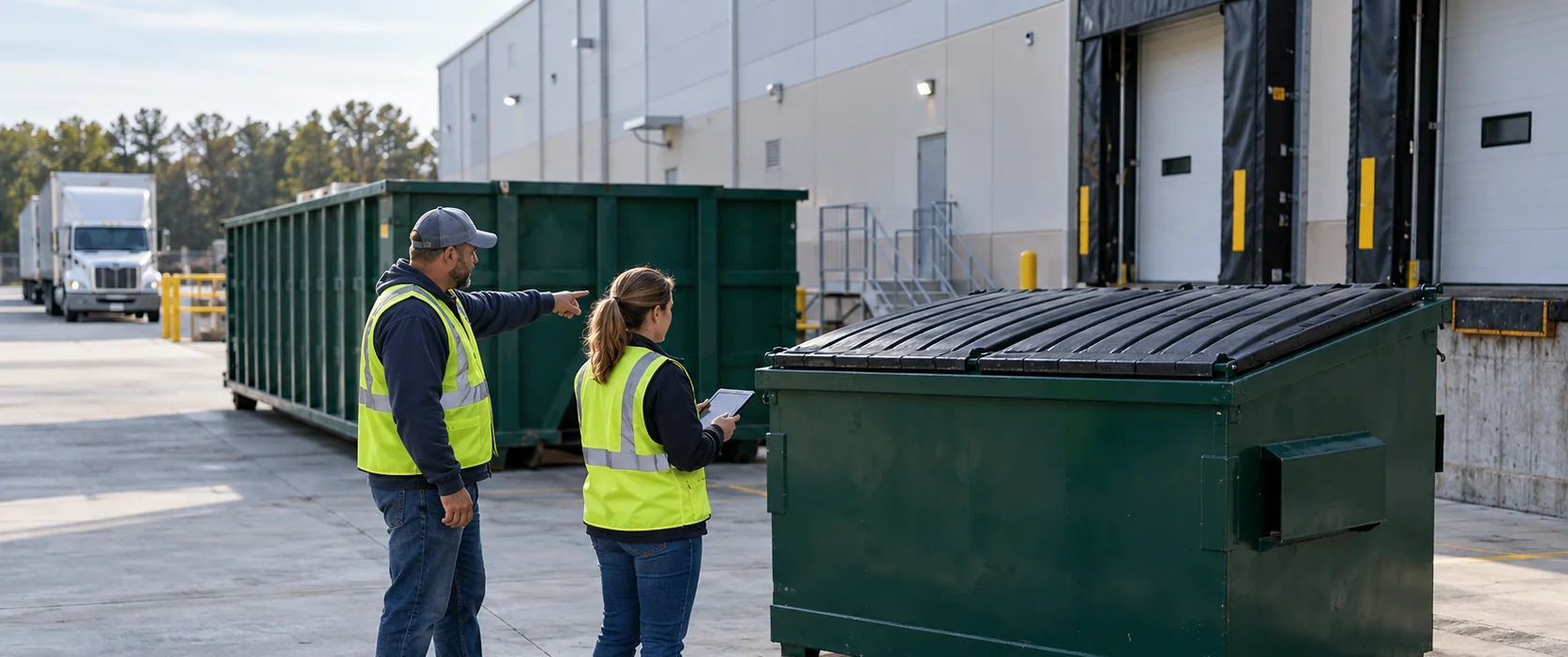
Waste Harmonics Keter’s municipal solid waste service covers everyday business refuse using equipment such as front-load containers, compactors, carts, and roll-offs. Manufacturing residuals require separate evaluation; do not automatically treat them as ordinary commercial trash.
Which Waste Streams Does Your Facility Generate?
Map Waste by Department and Process
Walk the facility with department leads. Map receiving, production, maintenance, offices, kitchens, and shipping separately. Record the material, source, typical quantity, current container, collection method, and person responsible. Include occasional waste from shutdowns, equipment changes, and cleanouts.
Ask where materials become waste and what they contact before disposal. Clean packaging leaving receiving is a different stream from packaging contaminated during a process. A product name or appearance alone may not describe the waste accurately.
Confirm Classification Before Choosing a Disposal Route
For U.S. operations, EPA’s hazardous-waste identification guidance distinguishes listed hazardous wastes from wastes exhibiting ignitability, corrosivity, reactivity, or toxicity. A production residual should not be classified as non-hazardous simply because it looks harmless.
EPA’s guidance on generator waste determinations explains the use of reliable waste and process knowledge, and testing when available knowledge cannot support an accurate determination. Have your environmental lead or qualified specialist evaluate the stream and applicable state requirements before choosing its route.
Keep the supporting information with the stream record and update it when inputs or processes change. A safety data sheet can contribute information, but it does not by itself establish the classification of every waste produced from a product.
Measure Volume, Weight, and Peak Demand
Observe representative operating cycles. Record container fullness before pickup, weight tickets where available, and any overflow or extra collections. Note production peaks and one-time loads separately. Lightweight packaging can consume storage space rapidly; dense material can reach a weight limit with space remaining.
How Should You Separate and Store Waste?
Place Collection Points Where Waste Is Generated
Put appropriate collection points near the work that creates the material, then plan the route to central storage. Avoid making staff cross busy vehicle lanes or carry material unnecessarily. Measure the footprint, loading access, and internal transport effort before finalizing placement.
Keep Different Handling Requirements Separate
Use separate arrangements where mixing would compromise acceptance, recovery, or handling. Keep unknown process waste, chemicals, batteries, and other materials requiring review out of general refuse. Confirm storage and packaging requirements with your environmental lead and the receiving provider.
Think of the setup like organizing ingredients before cooking: putting everything into one bowl may save a step initially, but separating it afterward can make the whole job harder. Waste separation works best at the point of generation, before clean material is mixed with something that changes its handling route.
The following examples guide planning. The receiving facility’s written acceptance criteria and your classification review govern the final arrangement.
| Waste Stream | Possible Collection Setup | Confirm Before Launch |
|---|---|---|
| General refuse | Carts feeding a front-load container or suitable compactor. | Accepted materials, capacity, weight limits, and pickup frequency. |
| Clean cardboard | Separate containers or baling where volume and handling justify it. | Condition requirements, bale specifications, space, and collection terms. |
| Clean plastic film | Dedicated bags, cages, or equipment suited to the recycler. | Accepted film types, contamination limits, and minimum collection quantities. |
| Food waste | Separate compatible containers with planned cleaning and service. | Local requirements, packaging acceptance, leakage control, and destination. |
| Production residuals | Dedicated handling after classification and receiving-facility review. | Waste profile, required analyses, packaging, destination acceptance, and records. |
Make Instructions Easy for Every Shift to Follow
Give each point a clear accepted-material list, common exclusions, and an escalation contact. Keep terms consistent across shifts and include temporary staff in training. Assign responsibility for checking contamination and moving full containers. Labels help only when employees can follow the collection process during normal work.
What Equipment Does a Big Facility Need?
Facility size alone does not determine equipment. Compare carts for internal movement, front-load containers for recurring refuse, roll-offs for larger loads, compactors for compatible compressible waste, and balers for suitable recoverable materials.
- Material compatibility: Check whether the equipment suits the stream’s density, moisture, shape, and acceptance requirements.
- Capacity and flow: Match storage to what accumulates between collections, including the longest service gap and busy periods.
- Site requirements: Confirm footprint, loading height, truck approach, lift clearance, and any required electrical or civil work.
- Staffing and maintenance: Identify trained operators, inspection tasks, maintenance support, and the process for equipment downtime.
Waste Harmonics Keter’s equipment and compactor services include assessing space and waste volume, sourcing equipment, installation, and ongoing maintenance. Ask which arrangement fits your verified streams rather than specifying a machine before the site review.
For compactors and balers, include applicable guarding, training, and energy-control procedures in the setup. OSHA’s lockout/tagout standard addresses servicing or maintenance where unexpected startup or stored energy could injure employees. Treat jam clearing and maintenance as controlled tasks, not improvised extensions of routine loading.
How Do You Plan Pickups Around Your Operations?
Build the schedule around accumulation and access. Align collection with receiving, production, and available loading windows. Confirm gates, truck routes, parking conflicts, and the onsite contact before service begins. Separate recurring demand from temporary loads so one cleanout does not permanently inflate the schedule.
- Service trigger: Define scheduled collection days or an agreed process for requesting a haul before capacity becomes a problem.
- Missed pickup response: Identify who contacts the provider, how escalation works, and what safe temporary arrangements are available.
- Peak demand: Agree how additional containers or collections are requested and who approves the expense.
A missed haul can leave the same dock space needed for outgoing orders occupied by waste. Record completed service as well as scheduled service; otherwise, overflow may be mistaken for a capacity problem when the real issue is collection reliability.
Who Owns Each Part of the Waste Program?
- Operations: Department leads oversee separation, internal movement, access, and reporting of unusual materials.
- Environmental, health, and safety: Qualified personnel review classification, applicable requirements, onsite procedures, and process changes.
- Procurement and finance: Agree service scope, pricing, change approvals, invoice checks, and vendor performance reviews.
- Providers: Carry out the contracted collection or processing work, communicate acceptance requirements, and supply agreed service records.
Keep one overall program owner and named backups. The awkward phone call comes when a load is rejected and procurement asks who approved it, while production says it used the usual container. Written acceptance instructions and change approval make that conversation easier to prevent and resolve.
Outsourcing collection does not automatically transfer the business’s waste-classification responsibilities. Document who provides profiles, checks receiving acceptance, and approves a new stream before staff add it to the program.
What Does Non-Hazardous Waste Management Cost?
Equipment and Collection Costs
Compare rental or ownership costs, installation, utilities, maintenance, collection frequency, and exchanges. Include internal labor for moving material and preparing loads. A machine that reduces loose volume may introduce operating and upkeep costs that need to be justified.
Processing and Disposal Charges
Material type, weight, destination, and acceptance requirements affect the quote. Ask whether charges are calculated per collection, container, ton, or another basis. Confirm any recycling revenue or rebates in writing, including quality conditions and deductions; do not assume recovery always produces a payment.
Costs That Are Easy to Miss
Look for contamination fees, rejected loads, repeat handling, emergency collections, blocked-access visits, and container overages. Keep these visible by stream instead of absorbing them into a single waste expense line.
Overbuilding the program ties money up in equipment and capacity that sit unused. Underbuilding it leaves staff moving waste twice, paying for extra service, or working around full containers. Compare total operating cost with the disruption each arrangement creates. The lowest starting quote may still fit poorly once the actual workload is included.
What Should You Ask Before Hiring a Provider?
- Scope and acceptance: Which verified streams are covered, which are excluded, and what information is needed before acceptance?
- Equipment and access: What equipment is recommended, who installs and maintains it, and what site conditions must be met?
- Destinations and records: Where will material go, and which weight, service, disposal, or recovery records can be provided?
- Pricing and changes: What is included, what creates extra charges, and how are new materials or additional collections approved?
- Accountability: Who owns escalation, what response commitments are contractual, and how will performance be reviewed?
Give bidders the same inventory, site conditions, and required service windows. A cheap proposal that excludes a difficult stream is not directly comparable with a quote that includes it.
How Do You Know the Setup Is Working?
Establish a baseline before changing service, then compare representative operating periods. Track overflow, rejected loads, extra collections, completed pickups, total cost by stream, and staff time resolving problems. Retain weight and recovery records where available.
Define the measurement basis for diversion figures. A collected recyclable load does not automatically prove that every pound was recovered. Keep estimates distinct from measured weights and obtain supporting information from the receiving route when reporting outcomes.
Review results after launch and whenever production, occupancy, materials, or equipment changes. Rising exception charges or recurring staff workarounds are reasons to revisit the setup.
How Waste Harmonics Keter Manages Non-Hazardous Waste
Waste Harmonics Keter’s managed waste and recycling service begins by reviewing sites, streams, equipment, and spend. Its published approach includes coordinating haulers and recyclers, scheduling collections and swaps, managing equipment service, consolidating billing, and reporting activity and costs.
For a large facility, that provides a route to aligning equipment, collection, and vendor responsibilities within one managed program. Confirm coverage for each stream and the records supplied for its destination. Waste Harmonics Keter states that hazardous waste is outside its municipal solid waste program; specialist vendors remain in place for that separate scope.
Evaluate the arrangement through outcomes you can verify: suitable capacity, fewer avoidable extra collections, resolved service exceptions, and invoices that match authorized work. Request an assessment based on your inventory and operating data rather than expecting one standard package to fit every site.
Put Your Waste Management Setup Into Action
Begin with a verified inventory and a map of how material moves through the facility. Use those details to agree separation, equipment, pickup timing, responsibilities, and complete pricing before launch.
Prepare your stream list, recent invoices, contracts, equipment details, and site layout for a discussion with Waste Harmonics Keter. A clear starting picture helps the team assess the non-hazardous program and identify where separate specialist arrangements are needed.
Frequently Asked Questions
How Do You Confirm Waste Is Non-Hazardous?
Use reliable information about the waste, its source, and the process producing it to assess applicable listings and characteristics. Testing may be required when that knowledge is insufficient. Have qualified personnel document the determination and review relevant state requirements.
Can One Provider Manage Every Waste Stream?
A managed provider can coordinate multiple streams, but coverage must be confirmed individually. Hazardous, unknown, or otherwise restricted materials may require specialist arrangements. A single invoice or contact does not establish acceptance for every material.
Do Big Facilities Need a Compactor?
Not necessarily. A compactor may suit sustained volumes of compatible compressible waste, but material type, site space, power, labor, maintenance, and hauling costs affect the decision. Compare it with other equipment using the facility’s measured workload.
When Should You Review Your Waste Management Setup?
Review after implementation and when production, occupancy, materials, or service conditions change. Recurring overflow, rejected loads, extra charges, and missed collections should also trigger a review of the non-hazardous waste management program.