TL;DR: Confirm what the local processor accepts; map where materials arise; size and place containers for each shift; set collection frequency; train teams on contamination; review pickups, charges, and diversion data after launch.
Dry mixed recycling can clear a crowded dock, or leave you explaining why another container was rejected. Before ordering bins, know what your facility produces, what the local processor accepts, and how material moves from the floor to the truck.
This guide gives facility managers and procurement teams a practical sequence for choosing collection points, capacity, pickups, and controls. It also shows which costs and service records to review so a simpler bin setup does not become a more expensive waste program.
Is Dry Mixed Recycling Right for Your Facility?
Dry mixed recycling generally means collecting eligible, clean, dry materials together and sorting them after collection. In the United States, the same collection model is commonly called single-stream or mixed recycling. It does not mean that every recyclable item belongs in one container: the provider and receiving facility determine the accepted list.
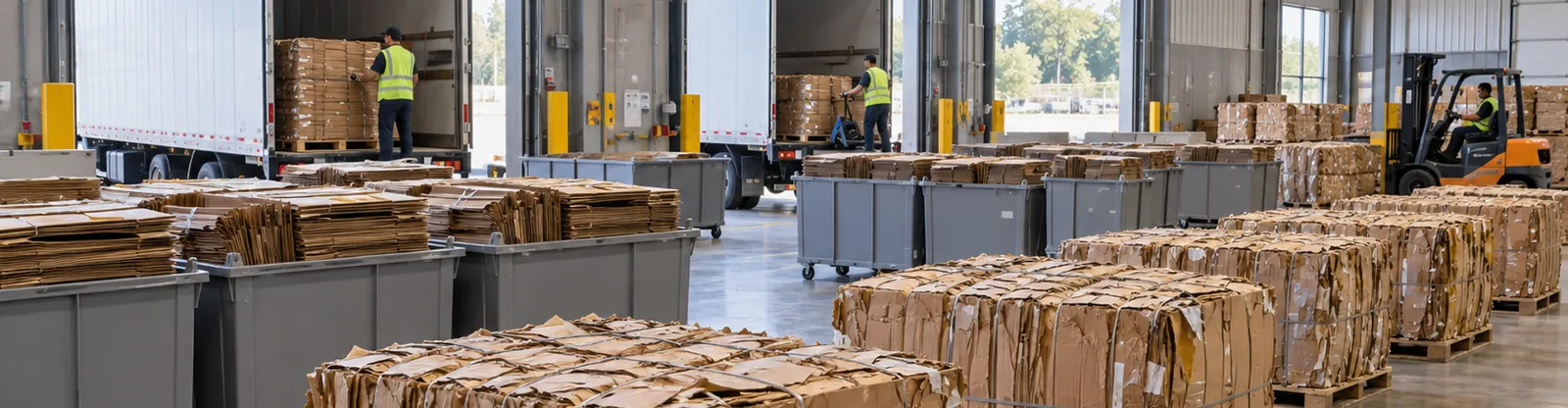
Start with a two-week walk through receiving, production, break rooms, offices, and loading areas. Note the materials, where they appear, their rough volume by shift, and whether they stay clean and dry. A facility with modest quantities of several eligible materials may benefit from one mixed route. A warehouse producing dense volumes of clean cardboard or stretch film may get a better operational or financial result by collecting that material separately.
Waste Harmonics Keter describes its single-stream recycling service as mixed recyclables in one container, routed for later sorting. Before starting service, ask which materials the local recycling facility accepts and whether high-volume items such as cardboard need separate collection.
What Can Go in Your Recycling Containers?
Confirm What the Local Processor Accepts
Ask the provider for a written, location-specific acceptance list before printing signs. Paper, cardboard, rigid containers, and metal cans may be candidates, but resin types, glass, coated packaging, and preparation rules vary. The EPA advises checking with the local provider because accepted materials differ by area. EPA recycling guidance
Keep Problem Materials Out
Build the first training card around the items employees actually handle. Do not assume plastic film, food-soiled packaging, batteries, or electronics can join the mixed stream. Give those materials separate routes when appropriate and authorized by the provider.
| Material at the Site | Likely Collection Decision | Confirm Before Launch |
|---|---|---|
| Clean cardboard and paper | Mixed stream or separate high-volume stream | Size, moisture, and bale or flattening rules |
| Empty rigid containers and metal cans | Possible mixed stream | Resin, shape, and residue limits |
| Stretch film and flexible plastic | Often needs a separate route | Whether the processor accepts film at all |
| Food waste, liquids, batteries, electronics | Keep out of mixed recycling | Separate handling and approved service path |
Use this as a planning matrix, not a universal acceptance list. The provider’s written rules govern each facility.
Where Should Containers Go?
Follow the material from the point of generation to the loading area. A single large container at the dock is convenient for the hauler but may be too far from a packing station where cardboard and containers accumulate every hour. Pair clearly labeled recycling and trash options at decision points; make the trip to the right container easy for the person doing the work.
- At the source: Put collection where a shift creates the material, while keeping aisles and exits clear.
- On the internal route: Identify who empties small bins, how often, and where mixed loads are consolidated.
- At pickup: Check gates, truck turning space, container clearance, and any shared access with deliveries.
Think of the system like a kitchen: if the dish rack is across the room from the sink, dishes pile up beside the faucet. Recycling placed away from the work has the same predictable problem.
How Much Capacity and Service Do You Need?
Estimate Volume by Area and Shift
Record container fill levels at the end of each shift and before scheduled pickup. Note peak days, inbound deliveries, seasonal activity, and any large one-off shipments. Do not size a weekly service around a quiet Tuesday if the dock fills every Friday.
Choose Containers That Fit the Site
Check usable footprint, loading height, weather exposure, and whether employees can safely move material into the container. Choose an arrangement that accommodates expected volume without forcing the team to stack material outside it.
Set a Pickup Schedule You Can Adjust
Start with a pickup frequency based on observed volume and revise it with fill and service records. Too few collections mean overflow, rehandling, and a rushed call to arrange an extra truck. Too many mean paying for air in half-empty containers. The right comparison is cost per useful collection, not simply the lowest quoted rate.
How Do You Keep Contamination Under Control?
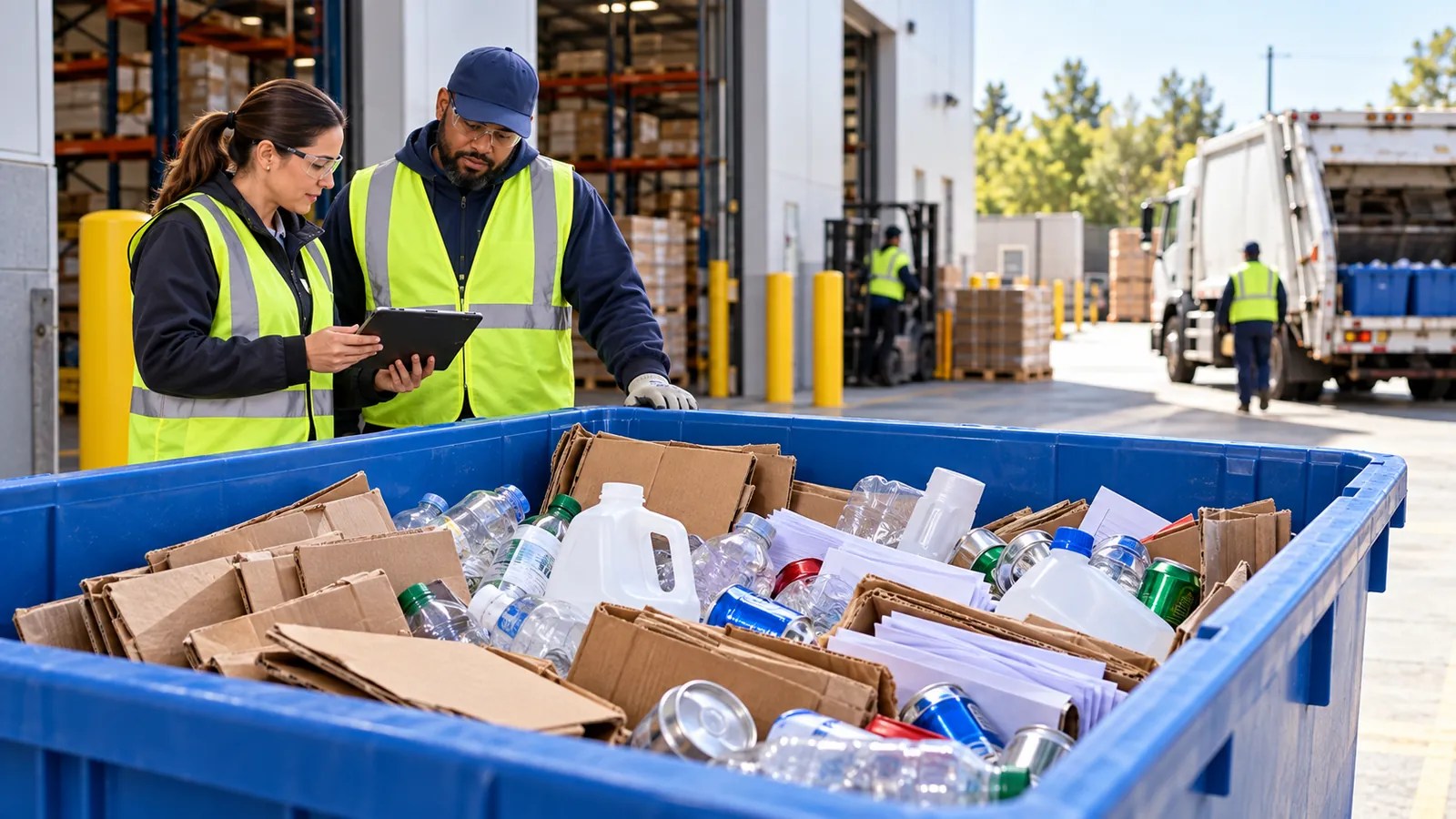
The awkward call usually comes after a rejected load: procurement asks why recycling turned into a trash charge, while the site team says the signs never matched what the hauler accepted. A simple inspection and feedback loop makes that conversation less likely.
- Before launch: Post a short, site-specific accepted list at each collection point and show supervisors the rejected items.
- During each shift: Check for liquids, food, mixed trash, and loose material around bins; correct the source of repeated errors.
- After service: Request the rejection reason, photographs if available, the charge, and the location or shift tied to the problem.
- After a change: Update signs and training when products, packaging, or processor rules change.
The EPA guide for commercial buildings recommends examining the waste stream and using contamination findings to improve communication and collection practices. That is a useful operating cycle for a mixed program.
What To Ask a Dry Mix Recycling Provider?
Ask for answers in the service proposal or operating agreement, not only in a sales conversation:
- Accepted materials: Which exact items and preparation rules apply at this site and receiving facility?
- Service design: What container sizes, placements, and pickup windows are available? Who handles overflow or a missed collection?
- Charges: What triggers contamination, extra pickup, rental, fuel, or rejected-load fees, and how are they documented?
- Proof of performance: Will you receive site-level weights, collection records, destination information, and diversion reporting?
For multi-site operations, repeat those questions by market. One purchasing contract does not guarantee every local processor accepts the same mix.
How Do You Know the Program Is Worth the Cost?
Compare the entire operating cost over a normal month: containers, scheduled and extra pickups, internal labor, contamination charges, and the trash service that mixed recycling may displace. Then compare that with actual collected weight and documented diversion, not only the number of blue bins on site.
The blunt trade-off is this: too much separation can consume floor space, labor, and collection spend for small volumes; too little can contaminate the mix or bury valuable cardboard in a lower-value stream. Choose the simplest arrangement that the receiving facility can process reliably, then change it when volumes justify a dedicated stream.
How Waste Harmonics Keter Handles Dry Mixed Recycling
Waste Harmonics Keter’s published name for this offering is single-stream recycling. It says it manages containers, collection cadence, routing to vetted recyclers, and site-level diversion records. A facility team can use those capabilities to turn a bin decision into a managed service plan: match the stream to local acceptance, set container capacity and pickup frequency, investigate contamination or missed service, and review results by location.
Its recycling and diversion service describes program design, stream selection, signage, recycler routing, and documented diversion. Its program optimization service describes using fill and pickup data to adjust container size and service frequency. Ask for a location-specific plan and a clear reporting sample before committing to a rollout.
Start With a Site-Level Plan
A successful launch starts with an accepted-material list, a map of collection points, observed volume, and a service agreement that makes exceptions and charges visible. Review the first month of fills, pickups, contamination, and costs with the site team. Adjust the system where the work actually happens.
Frequently Asked Questions
What Is Dry Mixed Recycling?
It is the collection of eligible, clean, dry recyclable materials together for sorting after pickup. In many U.S. service descriptions, this arrangement is called single-stream or mixed recycling. Acceptance depends on the local processor.
How Do I Size a Dry Mixed Recycling Container?
Measure fill by shift and before pickup for a representative period, including peak days. Use those observations with available space and truck access to choose capacity and frequency, then revise after launch.
What Happens If a Load Is Contaminated?
The provider may reject it, sort out material, or assess an extra charge, depending on the agreement and facility rules. Require a documented reason and use it to correct the source of contamination.
Can One Program Cover Multiple Facilities?
Yes, a managed program can coordinate multiple locations, but accepted materials, container sizes, schedules, and processing outlets should be validated for each site.